- HOME
- TOURS
- DESTINATIONS
Aotearoa - untamed
Vibrant + electric
- TRAVEL GUIDES
Budget, packing and more
Everything you need to know
- ABOUT US
- CONTACT
Vietnam Travel Guide

31 August | 8 min read
Contents
- Vietnam Travel Guide: Ho Chi Minh City, Hoi An, Hue and Hanoi
- Vietnam essentials
- Ho Chi Minh City: the beating heart of the south
- Hoi An: the lantern city
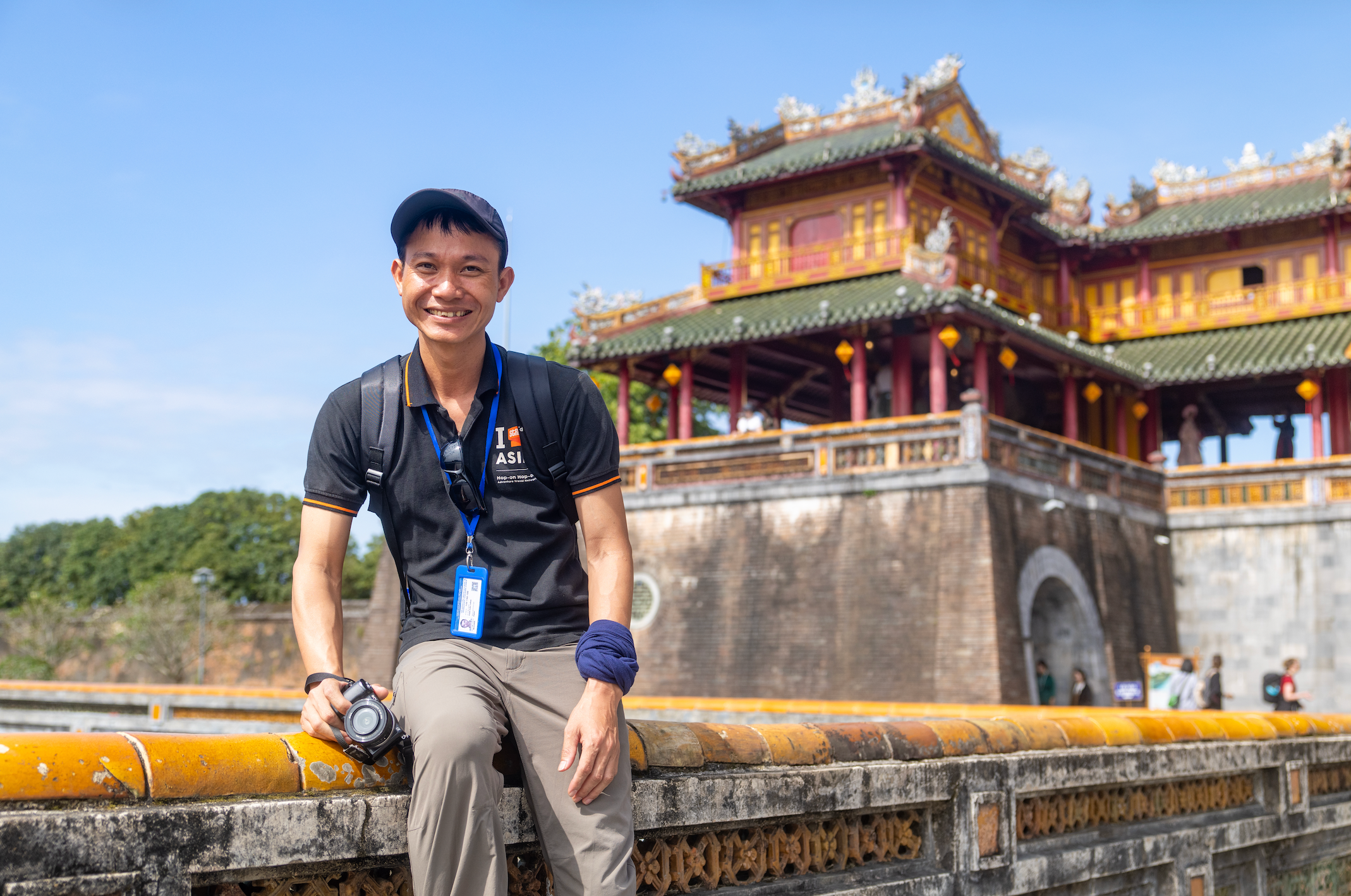
- Hue: the imperial capital
- Hanoi: the ancient capital
- The stop no one else makes: Bai Xep
- Getting there with Stray
- FAQs
Vietnam Travel Guide: Ho Chi Minh City, Hoi An, Hue and Hanoi
Bordered by China, Laos, Cambodia and the South China Sea, Vietnam is a country that has it all: lush rainforests, magical waterfalls and rivers, traditional temples and villages, and cities that fizz with energy. It's the perfect combination of modern and classic.
This guide runs south to north, the way Stray's Vietnam route does: starting in Ho Chi Minh City, up the coast through Hoi An and imperial Hue, and finishing in the ancient capital, Hanoi, with the essentials up front so you can plan with confidence.
Vietnam essentials
Time zone
All of Vietnam is seven hours ahead of Greenwich Mean Time (GMT+7), with no daylight saving. Vietnam, Cambodia, Thailand and Laos all share the same time zone.
Climate and when to go
Vietnam has a hot, humid tropical climate with wet and dry seasons, but the timing depends on where you are: north, central or south each run to their own rhythm. Central Vietnam also has an annual typhoon season around October and November. Temperatures vary widely, from 5 to 10 degrees Celsius in the north in December up to 36 to 38 degrees in the south in April, so pack for the regions you're visiting.
Currency
The official currency is the Dong (VND), and most vendors will only accept it. US dollars are accepted in the larger cities but you'll always lose out on the exchange rate, and ATMs only issue Dong, so it's simplest to go local from day one.
Shopping
Vietnamese markets are lively, persistent places, and haggling is expected if you want a good price. A useful rule of thumb: offer the vendor half the asking price and bargain up from there. All the large cities also have western-style malls and supermarkets stocking most of what you'd find at home, at fixed prices with no bargaining.
Health and insurance
Visit a travel doctor before you go. Mosquito-borne diseases including dengue fever and, in remote countryside, malaria are present, so carry strong insect repellent (30 per cent DEET or higher). Valid travel insurance is essential and is required to travel with Stray.
Ho Chi Minh City: the beating heart of the south
Formerly known as Saigon (and still called that by cheeky locals), Ho Chi Minh City is the business hub of Vietnam and its biggest, busiest city: a vast, sweaty, hectic metropolis with a charm that doesn't go unnoticed. It's a city of contrasts, from luxurious hotels and boutiques to cheap hostels and chaotic markets, with steamed buns on most corners and a cool backpacker vibe around Pham Ngu Lao. It seems every man, woman and child has a motorbike, and dodging the wave of them to cross the street is a rite of passage: walk slowly, walk predictably, and treat it as an exercise in inner peace.
Things to see and do in Ho Chi Minh City
- The Reunification Palace: a time capsule of the 1960s, carefully preserved since the Fall of Saigon, when it was the presidential palace of South Vietnam. The free hour-long tour covers the reception rooms, basement war rooms, and the obligatory dance hall, gambling room and movie theatre. Afterwards, join the students and workers picnicking in the park out front with a bap xao (sauteed corn with shrimp and chilli) or a fresh banh mi.
- The War Remnants Museum: just around the corner, an important and sobering testament to the effects of the Vietnam War (known here as the American War), told largely from the Vietnamese perspective. Captured military hardware including jets and tanks sits on the lawn outside, along with a replica 'tiger cage' prison.
- The Cu Chi Tunnels: about 90 minutes outside the city, this vast underground network of residences, meeting halls, hospitals and schools was used by the villagers of Cu Chi during both the French occupation of the 1940s and the war in the 1960s. Sections of the tunnels have been widened for visitors, though it's still cosy down there, so bring a torch.
- The Museum of Vietnamese History: one of the nicest antiquity collections in the country, with an hourly water puppet show if you won't make it to Hanoi for one.
- The pagodas: Thien Hau Pagoda hosts an annual festival for the sea goddess it's named for, and Quan Am Pagoda is the oldest in town.
- Ben Thanh Market: full of bargains and curios in District 1, with Saigon Square across the road for clothing. For a change of scene, spend an afternoon in Cholon, the traditional Chinese neighbourhood, which feels like a different country altogether.
Eating and drinking in Ho Chi Minh City
You can't get much better variety than HCMC. Tick off pho (noodle soup), banh mi (Vietnam's answer to the baguette sandwich, and far tastier), banh bao (steamed buns filled with herbed mince and sometimes an egg) and steamed morning glory in oyster sauce. After dark, the backpacker action centres on Pham Ngu Lao, a sprawling stretch of bars, clubs and cheap eateries where a fresh beer costs next to nothing. One practical note: bag snatching is common in this area, so leave your bag locked up at your accommodation and carry only the cash you need.
Hoi An: the lantern city
Despite its small size, Hoi An packs an almighty punch as one of the most beautiful and popular destinations in Southeast Asia, thanks largely to its wonderfully preserved UNESCO World Heritage Old Town. The vibe is magical, especially in the evening when the riverfront lights up with a rainbow of lanterns and floating candles, and the pedestrianised streets are made for meandering. Visit during the full moon and there are even more lanterns on display.
Things to see and do in Hoi An
- Tailor-made clothing: Hoi An's signature experience. There are well over 400 tailor shops offering 24-hour turnaround at very reasonable prices, so set your budget first, ask for recommendations, and be very clear about exactly what you want. Done right, it's one of the best experiences in Asia.
- The Old Town: wandering the streets is free, but to enter the sites and museums you'll need an Old Town Ticket, which covers five sites of your choice. Traveller favourites include the Tan Ky house, the Japanese Covered Bridge, Phuc Kien Assembly Hall and the Museum of Trade Ceramics.
- A river boat cruise: cruise the Thu Bon River from Hoi An to where it meets the sea, watching rural river life drift past. All you have to do is sit back and relax.
- The My Son Cham ruins: hidden in a mountain-ringed valley an hour from town, the UNESCO-listed ruins of the Cham Dynasty are best seen at sunrise if you can drag yourself out of bed.
- The beaches by bicycle: grab a bicycle and pedal out through the rice paddies and villages to Cua Dai and An Bang, two of the most beautiful beaches in Vietnam. Beach season runs roughly February to September.
- The Cham Islands: 27 kilometres offshore, with pristine beaches ideal for snorkelling and diving (best from December to August).
- Backstreet Academy: perfect for the rainy season: cookery classes, or try your hand at making one of Hoi An's famous lanterns with a business that goes back generations.
Eating and drinking in Hoi An
The food in Hoi An is to die for, from street food to French-influenced pastry shops. Trading history with China and Japan left the town dishes found nowhere else: cao lau: a unique noodle dish featuring thick, chewy rice noodles bathed in a rich, soy-based pork broth, topped with sliced char siu pork, fresh herbs, and crispy rice crackers, and White Rose dumplings, delicately stuffed with prawn and pork and topped with fried shallots. Faifo Coffee roasts locally grown beans in-house, the Reaching Out Teahouse is a fair-trade social enterprise employing people with disabilities and serving excellent food, Phi Banh Mi is one of the best banh mi stalls in Vietnam, and tiny Nu Eatery behind the Japanese Bridge is worth ordering the whole menu with a group. For a night out, Dive Bar in the middle of Old Town has great music, a pool table and a famously generous bar team.
Hue: the imperial capital
In Central Vietnam, Hue was the national capital from 1802 to 1945 under the Nguyen Dynasty, and its complex of ancient royal monuments is now a UNESCO World Heritage Site. The city carries its history visibly: it endured deeply painful chapters during the war, and while many historic features were neglected afterwards, restoration is steadily bringing them back. The result is a city with a reflective, historical atmosphere, a fascinating place to take a trip down Vietnamese memory lane.
Things to see and do in Hue
- The Imperial Citadel: the former seat of government and the first stop for most travellers: a vast network of temples, museums, pavilions and gates with a surprisingly quiet, peaceful atmosphere inside its walls. Plan at least a full morning, easily a full day.
- The Perfume River: named for the orchids that scent the air in autumn, the river passes many of Hue's most cultural and historic sites. Take a boat ride or a relaxing walk along its banks.
- The Tombs of the Emperors: best reached by boat, these are perfect examples of Vietnamese Buddhist architecture and funerary style. Some have crumbled into beautiful ruins, others are being restored, and the countryside ride between them is a highlight in itself.
- A motorbike tour: jump on the back of a bike with a local guide and see the 'real' Vietnam: quaint villages, lush rice paddies, the Japanese covered bridge, a fortune teller, incense-making, the Rice Museum and a conical hat maker's home, plus an Emperor's tomb and the Citadel's Forbidden City.
- Thien Mu Pagoda: housing fine gold and silver Buddha statues and overlooking the river, this pagoda is the official symbol of Hue.
- Thanh Toan Bridge: a beautiful wooden footbridge just outside the city, perfect for a taste of rural life away from the pace of town.
- Alba Thanh Tan Hot Springs: about 30 kilometres out, worth a full day: ziplining, high wires and water games on top of the outdoor hot spring baths and optional spa treatments.
Eating and drinking in Hue
Hue has food at every turn and every budget. The famous local dish is bun bo Hue, a noodle soup with sliced beef and chilli oil, and the local treat is fresh sesame candy, sweet and chewy with peanuts. The Dong Ba market is the classic local food experience, with one caveat: order only from the menu, and if anything unordered arrives at the table, send it straight back, because Dong Ba has a reputation for surprising visitors with inflated bills.
Hanoi: the ancient capital
The vibrant yet ancient capital sits on the banks of the Red River, a spectacular French-colonial city that blends a buzzing centre with tranquil countryside. The vibe is frenetic, electric and hectic: winding avenues, calling hawkers, speeding scooters, steaming street food, hidden temples and piping hot coffee. The must-do is simple: wander the Old Quarter and let yourself get lost.
Things to see and do in Hanoi
- The Old Quarter: the 36 streets of the Old Quarter were traditionally named for what their guilds sold, so you'll still wander from 'Silver Street' to 'Noodle Street' and spot exactly where one trade ends and the next begins. It's made for long exploratory walks, with street snacks never more than a conical hat away.
- Hoan Kiem Lake: the Lake of the Restored Sword, where legend says a giant golden turtle returned Emperor Ly Thai To's magical sword to the Dragon King after Vietnam's defence against China. Look for soft-shell turtles in the water, locals practising tai chi in the early morning, and cross the Huc Bridge to Ngoc Son Temple on Jade Island.
- The Water Puppet Theatre: Hanoi's performances of this 11th-century art form are rated the best in the country. It began in flooded villages, where locals made puppets dance on the water, and it's still magical today.
- Street food and motorbike tours: foodies should book a street food tour with a locally run operator to find dishes you didn't know existed, or see the city from the back of a motorbike, with some operators combining both into one very good day.
- The markets: Dong Xuan Market covers several floors of sunglasses, souvenirs and everything in between (daily, 6am to 7pm), and the weekend night market runs down Hang Dao from 7pm Friday to Sunday.
- The French Quarter: wander the tree-lined streets and elegant architecture around the Hanoi Opera House, a favourite backdrop for wedding photos.
- The Temple of Literature and Ho Chi Minh Mausoleum: a beautiful garden-filled university where scholars have studied since 1070 AD, half an hour's walk west of Hoan Kiem Lake, and the Ho Chi Minh Mausoleum, where residents queue to pay their respects to Vietnam's most revered leader.
- Halong Bay: technically not Hanoi, but tours leave from here and it can't be missed: more than 2,000 limestone formations rising from blue water dotted with traditional junk boats. Kayak the lagoons, explore hidden caves and try squid fishing. With Halong Bay tours, you get what you pay for, so choose quality.
Eating and drinking in Hanoi
Hanoi's signature is ca phe trung (egg coffee): a decadent drink made by whipping egg yolks with condensed milk until thick and creamy, poured over rich, hot Vietnamese robusta drip coffee. The best is found at Dinh Coffee, hidden up a dark corridor opposite Hoan Kiem Lake. As evening falls, join tourists and locals on tiny plastic stools at Bia Hoi Corner (Luong Ngoc Quyen and Ta Hien Streets) for Vietnam's famous fresh-brewed beer, delivered to bars daily with each region brewing its own blend, and finish with Vietnamese-style ice cream at the much-loved Trang Tien, just back from the lake.
The stop no one else makes: Bai Xep
Between the big cities, Stray's route stops somewhere most travellers never hear of: Bai Xep, a remote, car-free fishing village where you can experience an authentic Vietnamese beach without the crowds. It's one of Stray's signature off-the-beaten-track stays!
Getting there with Stray
Stray's Vietnam route starts in Ho Chi Minh City and weaves its way up the country through Hoi An, Hue and Bai Xep to finish in Hanoi, with transport, handpicked accommodation and a knowledgeable local guide organised throughout. The guide can translate, book activities and bring Vietnam's history to life, so all you need to bring is an appetite, for the food and the adventure.
FAQs
When is the best time to visit Vietnam?
It depends where you're going: the north, centre and south each have their own wet and dry season timing, and central Vietnam has a typhoon season around October and November. Temperatures range from 5 to 10 degrees in the north in December to the high 30s in the south in April, so plan by region.
What currency is used in Vietnam?
The Vietnamese Dong (VND). Most vendors only accept Dong, ATMs only issue Dong, and while US dollars are accepted in larger cities, you'll always lose out on the exchange rate.
What food should I try in Vietnam?
Pho and banh mi are everywhere and essential. Beyond those, each region has its own signature: cao lau and White Rose dumplings in Hoi An, bun bo Hue in Hue, and egg coffee in Hanoi.
Is it safe to cross the road in Ho Chi Minh City?
Yes, once you know the technique: walk slowly and predictably, and the wave of motorbikes will flow around you. Sudden stops and dashes are what cause problems. Consider it a rite of passage.
How do I get tailored clothing made in Hoi An?
Hoi An has over 400 tailor shops, most offering 24-hour turnaround at reasonable prices. Set your budget first, ask travellers or your guide for recommendations, and be very specific about what you want.
Is Halong Bay worth visiting?
Absolutely. More than 2,000 limestone formations rise out of the water, and you can kayak lagoons, explore caves and try squid fishing. Tours depart from Hanoi, and quality varies with price, so choose a reputable operator.