- HOME
- TOURS
- DESTINATIONS
Aotearoa - untamed
Vibrant + electric
- TRAVEL GUIDES
Budget, packing and more
Everything you need to know
- ABOUT US
- CONTACT
Cambodia Travel Guide

31 August | 10 min read
Contents
- Cambodia Travel Guide: Angkor Wat, Phnom Penh, Siem Reap and Everything In Between
- Cambodia essentials
- Why visit Cambodia?
- Siem Reap: gateway to Angkor
- A day at the temples of Angkor
- Phnom Penh: the pearl of Asia
- 5 foods you have to eat in Cambodia
- Culture and etiquette in Cambodia (and across Southeast Asia)
- Getting there with Stray
- FAQs
Cambodia Travel Guide: Angkor Wat, Phnom Penh, Siem Reap and Everything In Between
Cambodia's vibrant culture, fascinating history and beautiful islands make it an ideal place for an authentic adventure. This is the home of Angkor Wat, the biggest religious monument in the world, and Ta Prohm, the jungle-swallowed temple that set the scene for Tomb Raider. It's also a country of white-sand islands, humble and curious people, brilliant food and a recent history every visitor should take the time to understand.
This guide covers everything you need to plan a Cambodia trip: the essentials, the two big cities, a full day at the temples, the food you can't leave without trying, and the cultural know-how that will make you a better guest.
Cambodia essentials
Time zone
All of Cambodia is seven hours ahead of Greenwich Mean Time (GMT+7), with no daylight saving. Cambodia, Thailand, Laos and Vietnam all share the same time zone, which makes multi-country trips wonderfully simple.
Climate and when to go
Cambodia has a hot, humid tropical climate with two distinct seasons. The dry season runs roughly October through April and the wet season from May through September. Temperatures are consistent across the country, ranging from the mid 20s to the high 30s Celsius year-round.
Currency
USD is used everywhere, but carry crisp, clean, new notes, as old, dirty or torn notes won't be accepted. Keep one, ten and twenty dollar notes handy, since smaller vendors don't have change for larger denominations. The official currency is the Riel, used mostly for small change: pay 10 USD for a 9.50 USD purchase and you'll likely get 2,000 Riel back (1 USD is about 4,000 Riel).
Health and insurance
Visit a travel doctor before you go for quality medical advice. Mosquito-borne diseases including dengue fever and, in remote countryside, malaria are present, so pack a strong insect repellent (30 per cent DEET or higher). Valid travel insurance is a must, and it's required to travel with Stray.
Why visit Cambodia?
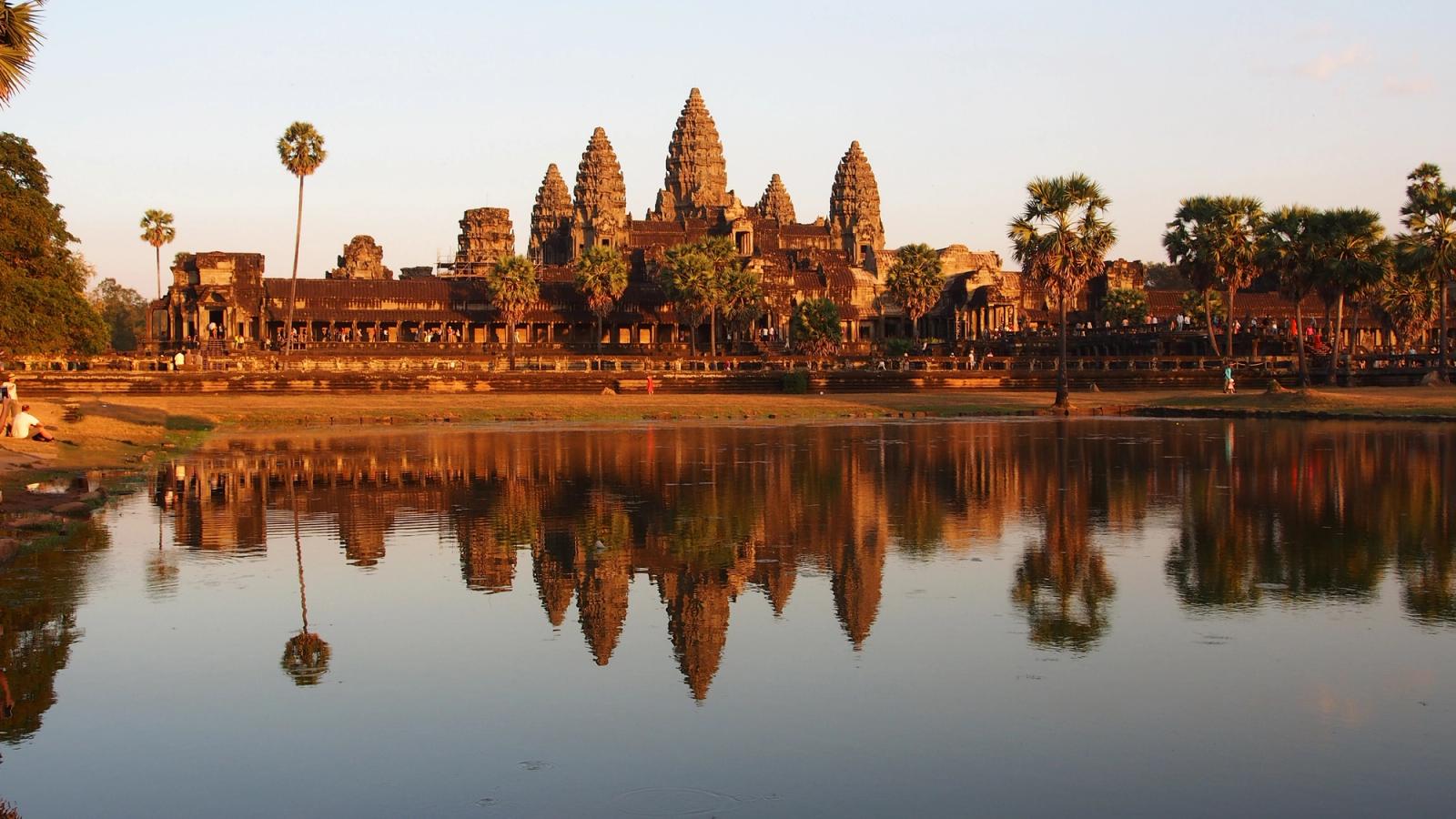
- Angkor Wat: the 12th-century Angkor ruins are the largest religious monument ever built, a UNESCO World Heritage Site that draws around 2 million international visitors a year, and it more than lives up to the hype.
- The cuisine: fresh, fragrant and less sweet and chilli-heavy than its neighbours' cuisines. From fish amok to Kampot pepper crab, eating is one of the great joys of a Cambodia trip (full food guide below).
- Beach life: Cambodia has spectacular white-sand islands. Koh Rong is the livelier pick, with guesthouses, bars and restaurants, while Koh Rong Samloem is the quieter paradise-within-paradise for pure relaxation.
- The history: the Khmer Rouge regime of the 1970s shaped modern Cambodia, and understanding that history in Phnom Penh is a sombre but essential part of any visit.
- Authentic experiences: with roughly 75 per cent of the population living on farms and rice fields, traditional life is everywhere. Cambodia is a little grittier and less polished than its neighbours, and that's exactly its charm.
Siem Reap: gateway to Angkor
A beautiful resort town and one of the fastest growing cities in Cambodia, Siem Reap is a charming hub for travellers seeking incredible, authentic and affordable experiences. It's quiet during the day, while visitors explore the temples, take Khmer cooking classes or relax by the pool, then comes alive at night with buzzing markets, flavoursome street food and bars that spill out onto the street.
Siem Reap and the Angkor complex were the centre of the Khmer Empire, which lasted from the 9th to the 15th centuries and was the most powerful empire in Southeast Asia. After centuries as a quiet village, the town's fortunes changed when the temples opened to visitors in the early 20th century, and it's now the heartland for exploring the ancient Khmer world.
Things to see and do in Siem Reap
- The UNESCO World Heritage Angkor Temples: the sprawling 400 square kilometre Angkor site is one of Southeast Asia's most important archaeological treasures. Explore by bike, tuk-tuk or with a guide.
- Downtown Siem Reap: the heart of the city is easy to explore on foot or by bicycle, centred around Pub Street, the Old Market and the Old French Quarter's colonial and Chinese architecture.
- Les Artisans d'Angkor: watch silversmiths, sculptors, lacquer artisans, weavers and silk painters at work in their studios, with free guides to show you around.
- A Khmer cooking class: start with a visit to a rural family home to see how the herbs, spices and vegetables are grown, then cook a typical Khmer entree, main and dessert to devour afterwards.
- Phare, the Cambodian Circus: a modern take on ancient Khmer performance forms with artistic direction to rival Cirque du Soleil: acrobatics, dance, music and theatre telling stories of Cambodian history and culture.
- The Angkor Night Market: over 200 stalls every night selling souvenirs, clothing, jewellery and crafts, with cafes and bars alongside for a cocktail and a cheap eat.
- An Apsara dance performance: Cambodia's indigenous ballet-like performance art, hosted by several restaurants and hotels, often with a buffet dinner for a reasonable price.
- Phnom Kulen Mountain: trek nature trails through lush forest on this holy mountain, see the River of 1,000 Lingas and Cambodia's largest reclining Buddha, then cool off in the Kulen Waterfalls.
Eating and drinking in Siem Reap
In the evenings, head to the Pub Street area just north of the Old Market for everything from street food to fine dining. Try the fish amok at Le Tigre de Papier (which also runs daytime cooking classes), or get a group together for the discovery platter at Bugs Cafe, complete with insect skewers, tarantula doughnuts and scorpion salad. Nightlife abounds around Pub Street, and if neon isn't your thing, the Apsara Theatre and Phare offer brilliant alternative evenings.
A day at the temples of Angkor
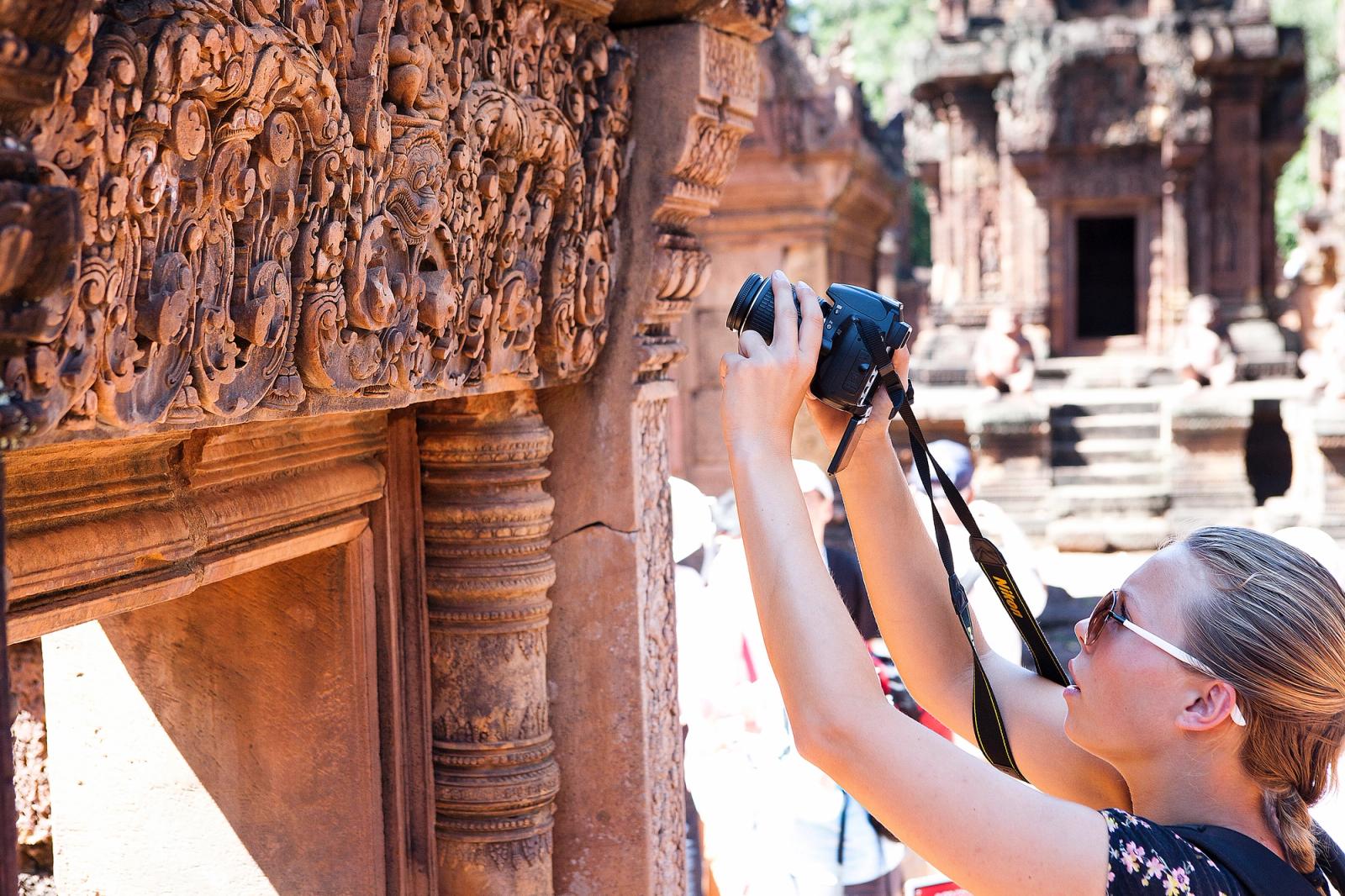
Most travellers structure their first Siem Reap day around the big three temples, and it's a day you'll never forget.
Start at Angkor Wat itself. The photos don't prepare you for the scale: palm-lined parks, statues and temples that seem to go on forever, with famous bas-reliefs depicting scenes from Hindu mythology carved in astonishing detail. Climb to the top of the central tower for a panoramic view over the complex and the surrounding jungle.
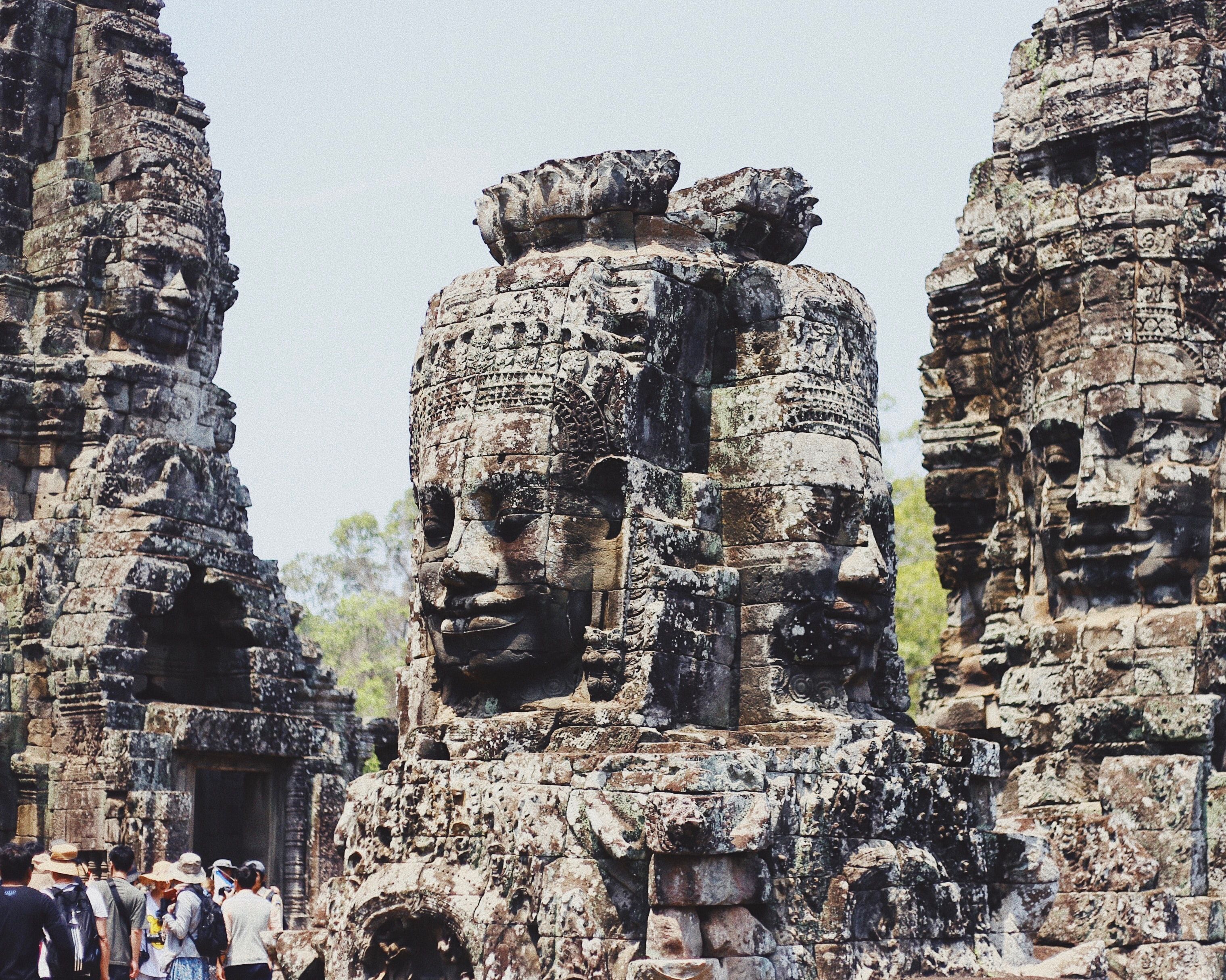
Next is the Bayon, a mind-bending labyrinth of towers carved with serene smiling and frowning faces. It looks less imposing than Angkor Wat from a distance, but inside it's extraordinary, and the faces seem to watch you wherever you walk. Enter from the east and follow the outer wall's carvings of everyday Khmer life clockwise to see them in order.
Finish at Ta Prohm, the temple reclaimed by the jungle, where giant tree roots snake through the ruins. This is where Angelina Jolie's Tomb Raider was filmed, and the famous strangler fig is now simply known as the Tomb Raider Tree. The shady doorways and tree-covered galleries feel completely different from the other temples, and for many travellers it's the favourite.
Tips for first-time visitors to Angkor
- Go early: the park gets busier as the day goes on. Travellers who arrive for the 5am sunrise say it's worth the early start, with time to wander before the heat builds.
- Dress modestly: cover your shoulders and knees to enter the temples. Pack a sarong or loose shirt in your day bag.
- Don't try to walk it all: the site is huge, so use a tuk-tuk, bike or car to move between the highlights. Your feet will thank you.
- Watch the monkeys: the temple monkeys will steal food, water bottles and even sunglasses if you're not careful.
- Respect the heat: wear sunscreen, carry plenty of water and stay out of the midday sun.
- Haggle like a pro: bargaining is a way of life in Cambodia, so don't be afraid to haggle at the stalls and markets.
- Take a guide: a knowledgeable guide adds a whole extra layer of history and culture to the experience. On a Stray tour, temple passes and guiding are organised for you.
Phnom Penh: the pearl of Asia
Sometimes referred to as the pearl of Asia, Cambodia's capital is an important place politically, economically and culturally. It has the hustle and bustle of Asia's bigger cities (think mopeds, everywhere), balanced by must-see historical buildings, museums and memorials, a fascinating cafe scene, top-notch food culture and buzzing bars.
Phnom Penh has an edgy, energetic atmosphere unlike anywhere else in Southeast Asia, shaped in part by its recent history and in part by the city's drive for progress. It isn't the easiest city to adjust to, but once you're there the energy is addictive.
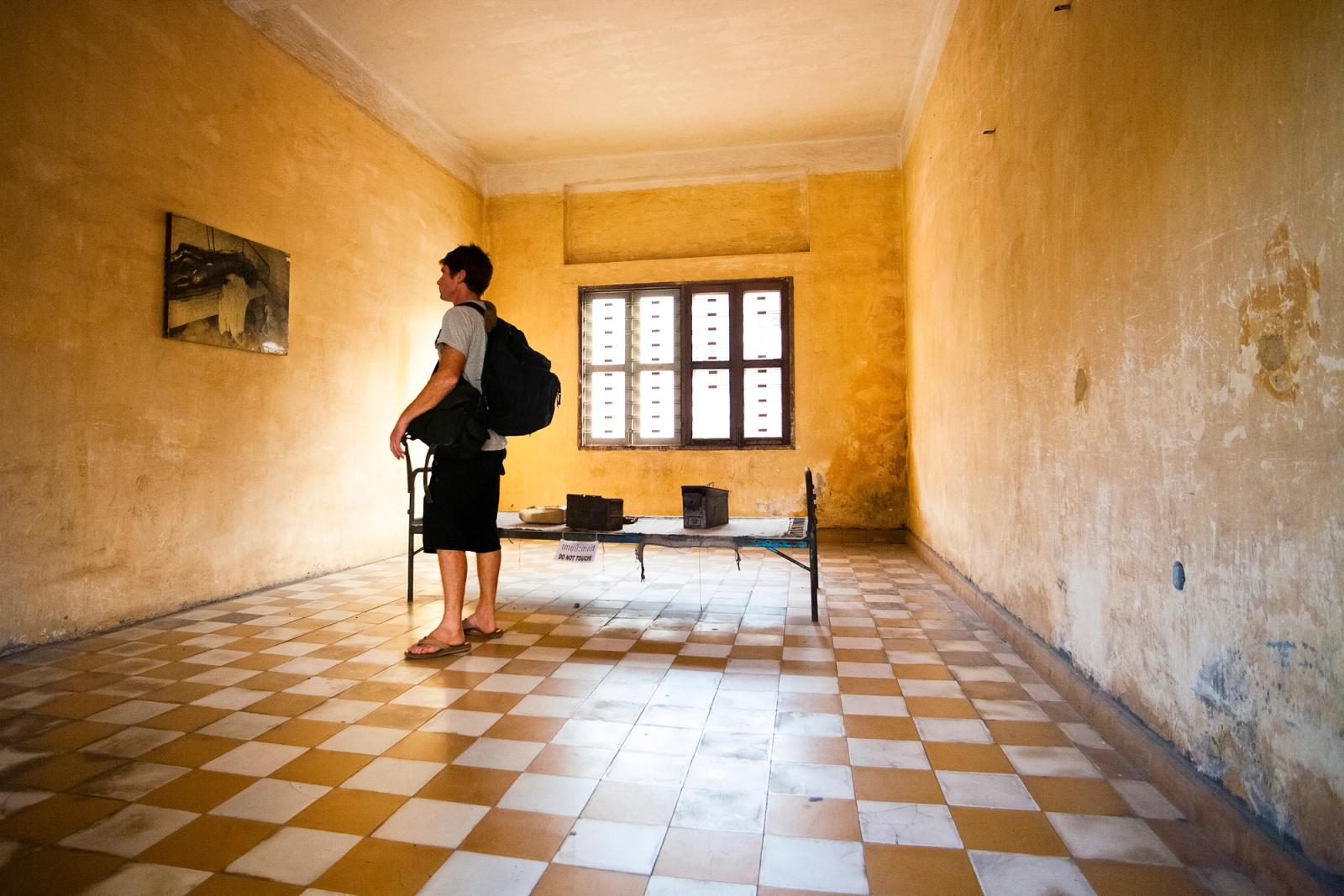
Understanding Cambodia's history
You can't get a real sense of Cambodia without visiting its two most sobering sites. The Tuol Sleng Genocide Museum (S-21 Prison) is a former high school converted into a prison under the Khmer Rouge, where more than 14,000 people were held. The stark rows of prisoner photographs are among the most haunting memorials you will ever see.
Just outside the city, the Killing Fields is where S-21's prisoners were later buried in mass graves. The site today is a peaceful, sun-lit field with a beautiful memorial to the victims, and the award-winning audio guide narrates this chapter of Cambodia's history in a clear and deeply moving way, letting you process it at your own pace. These visits are heavy, but they're essential to understanding the country and its people.
More things to see and do in Phnom Penh
- The Royal Palace: built in the 19th century and still the residence of Cambodia's king. Wander the Silver Pagoda and the central compound containing the throne room.
- Backstreet Academy: carve fruit, learn Cambodian boxing, dance with locals or fish the Mekong from a fisherman's boat-house, authentic experiences run by the locals who know the city best.
- A river cruise: cruise to where the Mekong and Tonle Sap rivers meet. Arrive early to claim a front-row rooftop seat for the best views.
- Market hopping: the huge Russian Market (Phsar Toul Tompong) is best for gifts and souvenirs, while the Night Market (Phsar Reatrey) is excellent for street food in a relaxed but lively setting.
Eating and drinking in Phnom Penh
Grab Asian and Western tapas at Friends the Restaurant near the National Museum, famous for training former street children in hospitality, with food as brilliant as the concept. For a break from rice and noodles, the burgers at Rustic Restaurant near the Royal Palace are excellent and easy on the budget. And for a night out, the Love Bar in the main backpacker district plays hip hop, RnB and house until late.
5 foods you have to eat in Cambodia
Cambodian cuisine shares plenty with its neighbours, especially Vietnam, but typically uses less sugar and chilli, which keeps the flavours fresh. Rice is the staple served with every meal, usually alongside a soup and one or two mains such as a curry or stir-fry. Don't leave without trying these:
- Fish amok: the national dish. Amok refers to the steaming process, with fish curry cooked inside banana leaves, fragrant with lemongrass, turmeric and ginger and made unforgettably creamy with coconut milk.
- Kdam chaa (fried crab): the south coast's seafood is superb, and fried crab with locally grown Kampot pepper in a sweet and spicy sauce is the star. Try it with the immature green peppercorns unique to Cambodia at the Kep Crab Market, where the catch comes straight off the boats.
- Lok lak: beef marinated in a garlicky soy mixture, fried in a sweet, sticky sauce and served with a runny fried egg and white rice to mop up the juices. The perfect gateway dish for less adventurous eaters.
- Kuy teav (Khmer noodle soup): often eaten for breakfast but delicious any time, this light soup combines flat rice noodles, herbs and pork stock, with add-ins like beansprouts, holy basil and chilli so you can tailor it to taste. The best versions come from busy roadside stalls full of locals.
- The weird and wonderful: Cambodia does adventurous eating better than anywhere: fried insects, snake and frog all feature, a legacy of harder times. Bugs Cafe in Siem Reap turns it into fine dining with tarantula doughnuts, insect skewers and discovery platters.
Culture and etiquette in Cambodia (and across Southeast Asia)
Cambodia is a predominantly Buddhist country, and the same cultural courtesies apply across Thailand, Laos and Vietnam too. A little awareness goes a long way.
Your body
- Buddhists regard the head as the most sacred part of the body, so never touch someone else's head.
- The feet are considered the least sacred. Don't point with your feet or show the soles of your feet to anyone, especially at a religious site.
- Take off your shoes when entering someone's home or a temple. If you see shoes by the entrance, remove yours too.
- Southeast Asian cultures are conservative about public displays of affection, so save the kissing and hugging for later, even as a couple.
- Dress modestly day to day. Swimwear is fine on the beach or at a resort, but carry a sarong or shirt to cover shoulders when interacting with a local community. When in doubt, take your cues from the locals.
Visiting temples
- Cover your shoulders and knees, remove your shoes, socks and hat at the entrance, and greet the Buddha with a simple bow.
- Walk clockwise around Buddhist monuments, and if you sit or kneel, tuck your feet under you so they never point at the Buddha.
- Monks, novices and nuns are deeply revered. Avoid touching them or their robes, and women especially should not touch or walk in the path of monks.
Interacting with locals
- Smile and be polite, and learn a few basic words like hello, please and thank you in the local language. It shows genuine interest and earns real goodwill.
- Respect elders. A simple lowering of the head when passing is appropriate.
- However cute they are, don't give sweets or money to children. It doesn't help them.
- Saving face matters in all social interactions. Don't point out someone's mistakes publicly and never lose your temper, as open anger is the surest way to lose face and will work against you. Stay calm, smile, and you'll have no problems.
- Always ask before photographing a local person, show them the photo afterwards, never photograph prayer or meditation sessions, and think twice before that handstand shot at Angkor Wat. It's disrespectful to both the locals and the site.
Getting there with Stray
Stray's Cambodia tour takes in everything in this guide: three days in Siem Reap with organised Angkor temple passes, Phnom Penh with the Killing Fields visit included, boutique twin/double accommodation, air-conditioned transport and a knowledgeable local guide who can translate, book activities and bring the country's history and culture to life. Over 75 per cent of Stray travellers join solo, so you'll be surrounded by like-minded adventurers in no time.
FAQs
When is the best time to visit Cambodia?
The dry season, roughly October through April. That said, temperatures sit between the mid 20s and high 30s Celsius year-round, and there's never really a bad time to visit.
What currency should I take to Cambodia?
US dollars are used everywhere, but only crisp, clean, new notes are accepted, and small denominations are easiest. The local Riel is used for small change at around 4,000 Riel to 1 USD.
How many days do you need at Angkor Wat?
You can see the big three temples (Angkor Wat, the Bayon and Ta Prohm) in one full day. If you have three days in Siem Reap, a good rhythm is one day with a guide, one for photography and one roaming freely.
What should I wear at the Angkor temples?
Cover your shoulders and knees, and wear comfortable shoes. Pack a sarong or loose shirt in your day bag, along with sunscreen and plenty of water.
What is the national dish of Cambodia?
Fish amok: a fragrant fish curry steamed in banana leaves with lemongrass, turmeric, ginger and coconut milk. You'll find it everywhere, and it's a must-try.
Do I need travel insurance for Cambodia?
Yes. Valid travel insurance is essential for Cambodia and is required to travel with Stray. It's also wise to see a travel doctor before you go and pack strong insect repellent.