- HOME
- TOURS
- DESTINATIONS
Aotearoa - untamed
Vibrant + electric
- TRAVEL GUIDES
Budget, packing and more
Everything you need to know
- ABOUT US
- CONTACT
faqs
BROWSE BY CATEGORY
Everything you need to know, sorted into a few topics. Jump to a category below, or search your question.
Accommodation
Accommodation
Where should I stay before or after my tour?
We highly recommend booking your pre-tour and post-tour accommodation in our primary gateway cities: Auckland for your arrival and Christchurch for your departure. Arriving at least one day before your tour starts is the best way to recover from jet lag and ensure you don't miss the Day 1 departure.
Here is our expert guide on where to stay and how to plan your travel around your tour start and end dates:
Before Your New Zealand Tour Starts (Auckland):
- Where to Stay: Look for accommodations in Auckland Central (CBD) or the lively Viaduct Harbour area, which are close to our central departure points.
- Why Arrive Early: New Zealand is a long flight for most international travelers. Arriving at least 24 to 48 hours early gives you a crucial buffer in case of flight delays, allows you to adjust to the local timezone, and gives you time to explore Auckland's waterfront, cafes, and volcanic cones.
After Your New Zealand Tour Ends (Christchurch):
- Where to Stay: We recommend booking a central hotel or hostel in Christchurch Central City.
- Why Stay Extra Days: Christchurch is a vibrant, creative city that has rebuilt itself beautifully following the 2011 earthquake. It is well worth spending an extra 2 to 3 days here to explore the botanical gardens, local art scenes, and nearby Banks Peninsula before flying home.
Live Destination Guides & Recommendations:
- Auckland: For local things to do and central city tips, read our live Auckland Travel Guide.
- Christchurch: To plan your extra days in the Garden City, explore our Christchurch Travel Guide.
- In-App Recommendations: You can also explore local city highlights and central accommodation booking options directly within Seymour as your departure date approaches.
Traveling on a Southeast Asia Tour? If you are joining us in Asia, your tour will typically start and end in major regional hubs like Bangkok or Hanoi. Check your specific tour itinerary page or our Asia destination guides for recommended arrival hotels
Will I be sharing a room?
Yes, unless you purchase a private room upgrade, you will be sharing accommodation. On Stray Select Tours (New Zealand), solo travelers are paired in a comfortable twin-share room with another traveler of the same gender. On Stray Adventure Tours, dorm-share accommodation is multi-share and is not gender-split or for exclusive use.
Here is a quick breakdown of room sharing by tour style:
Stray Select Tours (New Zealand Only):
- Default Setup: Standard accommodation is twin-share (two travelers per room).
- Solo Travelers: We will automatically pair you in a room with a fellow group member of the same gender. There is no single supplement fee required to travel solo!
- Want Your Own Space?: If you prefer complete privacy throughout the trip, you can purchase a Single Room Upgrade package at the time of booking (subject to local availability).
Stray Adventure Tours (Southeast Asia & New Zealand):
- Default Setup: Lodging defaults to high-quality backpacker hostels and unique wilderness lodges.
- Room Type: The default room option is social, dorm-style (multi-share) rooms. Please note that dorm-share accommodations on Adventure tours are mixed-gender and are not for exclusive use.
- Adventure Plus Upgrades: On select departures, if passenger numbers on an Adventure tour are low, Stray reserves the right to move customers onto our Select product at no extra charge. This represents an upgrade in service, and your accommodation will be upgraded to twin-share hotel rooms where locations differ.
Is there Wi-Fi at the accommodation?
Yes, most of our partner hotels, lodges, and hostels offer Wi-Fi, although connection speeds and reliability can vary. At our more remote wilderness stops, internet access may be limited or completely unavailable, offering a great opportunity for a temporary digital detox.
Here is what to expect regarding internet access depending on where you are staying:
- Standard Hotels & Hostels: In major towns, cities, and popular tourist hubs across New Zealand and Southeast Asia, you can expect free, reliable Wi-Fi in common areas and most guest rooms.
- Remote Wilderness Stays: When we head deep off the beaten track to our unique, scenic destinations, connection speeds can drop significantly.
- The "Digital Detox" Stops (New Zealand): At our iconic remote stays like Blue Duck Station and Kohutapu Lodge (Lake Aniwhenua), Wi-Fi is extremely limited or non-existent. These stops are designed for switching off, sitting around the campfire, and connecting with nature and your tour group.
How to prepare for offline days: To ensure you have everything you need when traveling through lower-coverage areas, we recommend taking these quick steps before leaving major cities:
- Download Offline Maps: Save regional Google Maps or navigation files to your phone so you can track your journey offline.
- Prep Your Entertainment: Download your favorite music playlists, travel podcasts, and audiobooks while connected to high-speed city Wi-Fi.
- Pre-load Your Travel App: Ensure you have logged into Seymour and downloaded your tour itinerary so you can access your travel plans at any time, even without an active internet connection.
Can I book a private room if I am a solo traveler?
Yes, solo travelers can easily secure a private single-room upgrade at the time of booking to guarantee privacy and comfort throughout their trip.
At Stray, we carefully handpick high-quality accommodations—ranging from boutique hotels, resorts, and eco-lodges to historic farming stations and premium hostels. Because our unique stays are incredibly popular, they tend to book out well in advance.
Here is what we recommend if you are traveling solo:
- Guarantee Your Privacy: If you prefer having your own space, your own bathroom (where available), and want to avoid being paired up with another traveler in shared rooms, we highly recommend adding a Single Room Upgrade when you first book your tour.
- Why Book Early: Due to high demand at our boutique properties, private room upgrades are subject to strict local availability. Securing your upgrade at the time of booking is the only way to guarantee a private room for every single night of your tour.
- Standard Solo Option: If you choose not to upgrade, don't worry! Solo travelers on our Select tours are automatically paired in a comfortable twin-share room with another solo traveler of the same gender. Solo travelers on our Adventure tours stay in fun, social, dorm-style accommodations.
New Zealand
New Zealand
How long should I spend in New Zealand?
We recommend spending at least 3 weeks (21 days) to comfortably explore both the North and South Islands of New Zealand. If you are limited to 10 to 14 days, we suggest focusing your time entirely on either the North Island or the South Island to avoid spending too much of your holiday in transit.
Because New Zealand’s landscapes are incredibly diverse and rugged, driving times can be longer than they appear on a map. Here is our expert guide on what you can realistically see based on your available travel time:
If You Have 3 Weeks or More (The Sweet Spot):
- What You Can Do: This is the perfect amount of time to travel from Auckland down to Christchurch (or run a full national loop). You will be able to check off iconic North Island cultural and volcanic highlights (Rotorua, Tongariro Crossing) before heading to the South Island for glaciers, fiords, and alpine hikes (Abel Tasman, Milford Sound, Queenstown).
- Our Recommended Tours:
- The Great Kiwi Journey (22 Days - Adventure): Our ultimate full-loop adventure starting and ending in Auckland.
- The New Zealand Odyssey (19 Days - Select): A premium, comfortable national journey from Auckland to Christchurch.
If You Have 10 to 14 Days (Regional Focus):
- What You Can Do: Instead of rushing across both islands, we recommend a deep-dive into one. Use this time to explore the South Island’s dramatic alpine loops, or focus on the North Island’s rich Māori culture, thermal parks, and stunning coastlines.
- Our Recommended Tours:
- The Deep South (11 Days - Select): A comfortable South Island loop starting and ending in Christchurch.
- Southern Wonders (11 Days - Adventure): A high-energy, nature-focused South Island loop.
If You Have 8 to 10 Days (Short & Sweet):
- What You Can Do: Ideal if you are short on time but still want to see the key highlights of a specific region.
- Our Recommended Tours:
- Coasts & Culture (10 Days - Adventure): A fast-paced North Island route covering coastal hotspots like Hahei, cultural hubs like Rotorua, and ending in Wellington.
- Alpine Adventure (9 Days - Select): A shorter South Island route designed for travelers wanting to experience the majestic South Island highlights at a comfortable pace.
What is the best time to visit New Zealand?
The best time to visit New Zealand is during the summer months from December to February, which offer the warmest weather and longest daylight hours for outdoor activities. However, the shoulder seasons of Autumn (March to May) and Spring (September to November) are highly recommended for pleasant weather, fewer crowds, and stunning seasonal scenery.
Because New Zealand is in the Southern Hemisphere, its seasons are opposite to those in North America and Europe. Here is a seasonal breakdown to help you choose when to book your tour:
1. Summer: Peak Season (December to February)
- The Weather: Warmest temperatures of the year (typically 20-30°C / 68-86°F) and long daylight hours (it stays light until 9:30 PM in the South Island).
- Why Go: Perfect for beach days, water sports, and hiking New Zealand's Great Walks. Festivals, outdoor events, and vibrant town centers are at their peak.
- Keep in Mind: This is the busiest time of year. Major highlights and popular accommodations book out months in advance. We recommend securing your summer spot on The Great Kiwi Journey or New Zealand Odyssey early!
2. Autumn: The Scenic Shoulder (March to May)
- The Weather: Pleasant, cooler days (15-22°C / 59-72°F) with crisp mornings and stable weather.
- Why Go: You will experience spectacular autumn foliage (especially in Central Otago and Christchurch), far fewer crowds at major tourist sites, and more competitive local pricing.
- Keep in Mind: Days begin to shorten, and swimming in lakes and oceans becomes much cooler.
3. Winter: The Alpine Season (June to August)
- The Weather: Cold temperatures, particularly in the South Island (1-10°C / 34-50°F), with frequent snow on the mountains.
- Why Go: Ideal for snow-sports enthusiasts! Queenstown and Wanaka transform into world-class ski hubs. It is also an incredibly beautiful time of year to see snow-capped peaks, frozen lakes, and enjoy cozy evenings by the fireplace.
- Our Recommended Winter Tour: Join our Fire & Ice or Alpine Adventure tours to experience the best of New Zealand's winter magic.
4. Spring: The Fresh Renewal (September to November)
- The Weather: Refreshing and highly unpredictable weather (12-18°C / 54-64°F) where you can experience "four seasons in one day."
- Why Go: Waterfalls are pumping from mountain snow-melt, valleys are filled with spring blooms and newborn lambs, and ski fields are still open in early spring. It is a fantastic, high-energy time for outdoor adrenaline activities.
Do I need a visa to visit New Zealand?
Most international visitors do not need a traditional visa for short holiday stays in New Zealand, but they must secure an NZeTA (New Zealand Electronic Travel Authority) before they fly. If you do not belong to a visa-waiver country, or plan on working while here, you will need to apply for a visa in advance.
Your entry requirements depend on your passport and the purpose of your trip:
1. Visa-Waiver Travelers (Holiday stays up to 3 or 6 months):
- Who this applies to: Citizens of over 60 countries, including the UK, US, Canada, Australia, EU nations, Japan, and many others.
- What you need: You do not need a visa, but you must apply for and receive an NZeTA before you board your flight. (For costs and how to apply, see our dedicated NZeTA FAQ).
- Australian Citizens: If you travel on an Australian passport, you do not need an NZeTA or a visa—you are granted a resident visa on arrival. (Note: Australian Permanent Residents do need an NZeTA but not a visa).
2. Non-Visa-Waiver Travelers:
- Who this applies to: Citizens of countries not on the visa-waiver list (including China, India, South Africa, and several others).
- What you need: You must apply for a Visitor Visa online in advance through the official Immigration New Zealand portal before booking your flights.
3. Working Holiday Makers (Ages 18-30 or 18-35):
- If you plan to fund your travels by working in New Zealand, you must apply for a Working Holiday Visa (WHV) before you arrive. This visa is incredibly popular with Stray travelers on our Adventure tours and allows you to work and travel in NZ for up to 12 or 23 months.
Standard Entry Checklist at Border Control: Regardless of your visa type, New Zealand border security will require:
- Passport Validity: Must be valid for at least 3 months beyond your planned departure date.
- Proof of Onward Travel: A confirmed ticket out of New Zealand (e.g., a return flight home or a flight to another destination).
- Sufficient Funds: You may be asked to show you have access to enough money to support yourself during your stay (typically $1,000 NZD per month).
Disclaimer: Visa rules can change. Always check current entry requirements directly on the official Immigration New Zealand website before booking your travel.
What is an NZeTA, and do I need one before I fly?
Yes, most international visitors traveling to New Zealand require a New Zealand Electronic Travel Authority (NZeTA) before boarding their flight. You must secure this digital travel authorization prior to arriving in the country.
The NZeTA is not a visa, but a mandatory electronic screening requirement for visa-waiver travelers (such as citizens of the UK, US, Canada, Australia, EU nations, and many others).
Here is everything you need to know about securing your NZeTA:
How to Apply:
- Apply via the Official Channels: We strongly recommend applying through the official New Zealand Government avenues to avoid third-party agency scams that charge excessive fees.
- App (Cheaper option): Download the free "NZeTA" mobile app (available on Apple App Store and Google Play). Applying via the app is faster and slightly cheaper.
- Website: Apply online via the official Immigration New Zealand Website.
Costs & Processing Times:
- Processing Time: While many NZeTAs are approved within 10 to 30 minutes, processing can take up to 72 hours. Do not leave it until the day of your flight - apply at least 3 days before you travel.
- The Fee: The NZeTA costs $17 NZD if applied for via the mobile app, or $23 NZD if applied for online.
- The IVL (Tourism Levy): When you apply for your NZeTA, you must also pay the International Visitor Conservation and Tourism Levy (IVL), which is $35 NZD (note: the NZ government has proposed raising this to $100 NZD, so please check official rates). The IVL helps fund local conservation and infrastructure.
- Validity: Once approved, your NZeTA is valid for multiple entries for up to 2 years.
Note: If you hold a valid New Zealand visa (like a Working Holiday Visa) or are an Australian citizen traveling on an Australian passport, you do not need an NZeTA.
What should I pack for New Zealand?
To pack for New Zealand, prepare for "four seasons in one day" by bringing versatile, high-quality layers, a reliable windproof and waterproof jacket, sturdy walking shoes, and strong UV sun protection.
New Zealand’s maritime climate can change rapidly, even during the peak of summer. To make sure you’re comfortable whether you’re hiking in national parks or exploring coastal towns, our local Kiwi guides recommend packing these travel essentials:
- The Layering System (Clothing)
- Waterproof & Windproof Outer Layer: A high-quality rain jacket is an absolute non-negotiable for New Zealand's sudden downpours.
- Insulating Mid-Layers: Lightweight fleece, wool sweaters, or packable down jackets to keep warm when temperatures drop in the evening or at higher altitudes.
- Breathable Base Layers: T-shirts and activewear (preferably merino wool or synthetic moisture-wicking fabrics) for hiking and sunny days.
- Footwear & Outdoor Gear
- Sturdy Footwear: Comfortable walking shoes, trail runners, or worn-in hiking boots with good grip for gravel paths, forest tracks, and volcanic terrains.
- Daypack: A 15-25L lightweight backpack to carry your water, layers, and camera during day walks and excursions.
- Reusable Water Bottle: Tap water is safe to drink across New Zealand, so bring a refillable bottle to stay hydrated and help reduce plastic waste.
- Sun, Nature, & Comfort Protection
- High-SPF Sunscreen & Sunglasses: The Southern Hemisphere sun is exceptionally strong due to low air pollution and a thin ozone layer. Protect your skin and eyes daily, even on overcast days.
- Insect Repellent: Essential for keeping the persistent West Coast sandflies at bay.
- Earplugs & Eye Mask: Highly recommended (and never goes astray!) if you are staying in shared hostel dorms on our Adventure tours.
Standard vs. Specialist Accommodation Note:
- For Select Tours: While 3-4 star hotels provide towels, we recommend bringing a small quick-dry travel towel for beach stops, waterfall swims, or our unique national park lodges (where bathroom facilities may be shared).
- For Adventure Tours: Always pack a lightweight travel towel and toiletries for hostel stays.
Ready to pack? Check out our complete packing guides and resources on our Travel Info page.
What currency is used in New Zealand?
The official currency of New Zealand is the New Zealand Dollar (NZD, symbol: $). We recommend using cards for almost all of your daily purchases, as New Zealand is a highly cashless society where electronic payments are the standard everywhere.
Here is our practical guide to managing your money, cards, and cash while traveling in New Zealand:
Cash vs. Card in New Zealand:
- Go Cashless: Debit cards, credit cards (Visa and Mastercard), and mobile payments (Apple Pay and Google Pay) are accepted almost everywhere—from high-end restaurants to remote local cafes, fruit stalls, and cabs. You do not need to carry large amounts of cash.
- EFTPOS & Paywave Surcharges: New Zealand’s local debit system is called "EFTPOS." If you insert your card and select "CHQ" or "SAV," there is rarely a transaction fee. However, using contactless payments (like "Paywave," Apple Pay, or credit cards) may sometimes incur a small surcharge (typically 1% to 2.5%) at smaller businesses to cover processing costs.
- American Express (AMEX): While widely accepted at major supermarket chains, hotels, and gas stations, AMEX is often not accepted at smaller cafes, boutique shops, or hostels. We recommend carrying a Visa or Mastercard as your primary card.
ATM & Cash Tips:
- Accessing ATMs: ATMs are widely available in all cities and towns. However, if we are heading to our unique, remote wilderness stops (like Blue Duck Station), ATMs will not be available. We suggest keeping a small amount of cash ($50 to $100 NZD) on hand for emergencies or small purchases in rural areas.
- Bank Notes & Coins: New Zealand bills are made of a durable polymer (plastic) and come in denominations of $5, $10, $20, $50, and $100. Coins come in 10c, 20c, and 50c, as well as $1 and $2 gold coins.
- The "Swedish Rounding" Rule: New Zealand phased out 1c, 2c, and 5c coins years ago. If you pay with cash, prices are rounded to the nearest 10 cents. For example, a purchase of $4.95 rounds up to $5.00, while $4.92 rounds down to $4.90. (Card payments are charged to the exact cent and are not rounded).
Is tipping expected in New Zealand?
No, tipping is not customary or expected in New Zealand. Service staff and tour guides are paid a fair wage, and the price you see on a menu or bill is the final price you pay, with no hidden service charges.
However, New Zealanders do appreciate exceptional service. If you would like to show your gratitude for an outstanding experience, here is a practical guide on how tipping is viewed across the country:
- At Cafes, Bars, & Restaurants: Tipping is not expected, even in high-end establishments. However, if you receive outstanding service, a tip of 10% is a generous gesture and highly appreciated by the staff. Some casual cafes may also have a spare change "tip jar" on the counter.
- Taxis & Rideshares: You do not need to tip taxi or Uber drivers. If you want to show appreciation, you can round up the fare to the nearest $5 or $10 NZD, or use the "tip" feature inside the rideshare app.
- For Your Stray Driver Guide: Our expert Stray Driver Guides work incredibly hard to keep you safe, share local stories, and ensure you have an unforgettable trip. While tipping your guide is never expected, if you feel they did an amazing job, a voluntary tip at the end of your tour is a wonderful way to say thank you.
- No Surcharges on Bills: Unlike some countries, the price listed on restaurant menus or price tags always includes New Zealand's 15% Goods and Services Tax (GST). The only exception is a potential 10% to 15% surcharge at some cafes and restaurants on public holidays (like Easter or Christmas Day) to cover mandated staff holiday wages.
Is the ferry between the North and South Islands included?
Yes, your Bluebridge Ferry crossing between Wellington (North Island) and Picton (South Island) is fully included in your tour price if you have booked a multi-island Stray tour.
The journey across the Cook Strait is widely considered one of the most beautiful ferry crossings in the world. Here is what you need to know about this spectacular leg of your trip:
- Seamless Logistics: You don't need to worry about booking tickets or coordinating timetables. Your Stray Driver Guide handles all the booking logistics and will guide you seamlessly onto the ferry when we arrive in Wellington.
- Spectacular Scenery: The crossing takes about 3.5 hours. If the weather is clear, we highly recommend grabbing a spot on the outdoor viewing deck. The final hour of the journey takes you deep through the breathtaking, bush-fringed waterways of the Marlborough Sounds - it is easily one of the most scenic highlights of the entire trip!
- Onboard Comforts: Bluebridge ferries are large, modern, and incredibly comfortable. Onboard you will find free Wi-Fi, movie rooms, comfortable lounge seating, local cafes, and bars serving craft beer and New Zealand wine.
- Keep Your Eyes Peeled: The Cook Strait is home to incredible marine life. Keep a lookout for dusky dolphins, seabirds (including albatrosses), and occasionally even pods of orcas or humpback whales swimming alongside the ship.
What power plugs are used in New Zealand?
New Zealand uses Type I power plugs, which have three flat pins in a V-shape (the same plug style used in Australia and China). The standard voltage is 230 volts AC with a frequency of 50 hertz.
To keep your phone, camera, and Seymour travel app charged on the road, here are our top tips for managing electronics in New Zealand:
- Get a Universal Adapter: If you are traveling from the UK, US, Canada, Europe, or Asia, you will need a plug adapter to fit New Zealand’s wall outlets. We highly recommend buying a universal adapter before you leave home.
- Check Your Voltage Compatibility: New Zealand operates on a 230V system. Modern electronic devices (like smartphones, laptops, tablets, and camera chargers) are typically "dual-voltage" (110V-240V) and will work perfectly with just a plug adapter.
- A Warning for Hair Dryers & Hair Straighteners: Older or single-voltage appliances from North America (which operates on 110V) can overheat, blow a fuse, or fail to work in New Zealand. Check the small print on your appliance - if it doesn't say "Input: 100-240V," leave it at home!
- Bring a USB Power Bank: On longer transit days through remote areas (such as crossing national parks or traveling down the West Coast), having a portable USB power bank in your daypack is a lifesaver to keep your devices fully charged while on the move.
When is the best 'off-peak' time to visit New Zealand to avoid crowds?
The best "off-peak" times to visit New Zealand are the shoulder seasons of Autumn (March to May) and Spring (September to November). These months offer the perfect balance of comfortable weather, lower local prices, and far fewer crowds at iconic destinations like Milford Sound and Hobbiton.
Here is why traveling during New Zealand's shoulder seasons is highly recommended by our local Kiwi guides:
- Comfortable & Pleasant Weather: During the shoulder seasons, the Southern Hemisphere sun is less intense than during the peak summer months (December to February). You will enjoy comfortable, crisp days that are absolutely ideal for active outdoor adventures and hiking.
- Fewer Crowds at Iconic Hotspots: Visiting "bucket-list" locations like Milford Sound, the Tongariro Alpine Crossing, or geothermal parks in Rotorua during the shoulder seasons means you can experience these breathtaking natural sights in peace, without the large summer tourist crowds.
- Great Value & More Competitive Pricing: Because you are traveling outside of the peak summer rush, local flight options, optional in-trip activities booked via Seymour, and pre-tour accommodations are often much more budget-friendly.
- Spectacular Seasonal Scenery:
- In Autumn (March to May): You will see New Zealand’s landscapes transform with incredible golden and red foliage, particularly in the South Island.
- In Spring (September to November): Valleys come alive with vibrant wildflowers and newborn lambs, and waterfalls are roaring at peak flow from the mountain snow-melt.
How much spending money do I need in New Zealand?
We generally advise budgeting around $90 NZD per day for your daily meals and personal expenses, plus a separate "activity fund" to cover New Zealand's incredible optional experiences. To help you plan, you will receive exclusive access to our Seymour optional activities app 2–3 weeks before your tour begins.
Because New Zealand is an active, bucket-list destination, your overall spending will depend on how many optional activities you choose to do.
Here is our official budgeting and activity price guide, prepared by our local Kiwi guides:
1. Your Optional Activities Budget
To make planning easy, we use a simple pricing key to categorize optional activities across our routes:
- FREE = No Charge
- $ = $0 - $100 NZD
- $$ = $100 - $250 NZD
- $$$ = $250 - $450 NZD
- $$$$ = $440 - $800 NZD
Here are some of our travelers' favorite options across the North and South Islands:
🌿 The Best FREE Activities (Budget-Friendly Gems)
You don't need to spend a fortune to experience the best of New Zealand! We break up our travel days with plenty of epic, zero-cost stops:
- Coromandel: Dig your own natural thermal pool at Hot Water Beach or walk the coastal trail to Cathedral Cove.
- Waitomo: Walk through the lush native forest on the Ruakuri Walk.
- Taupō: Feel the spray at the mighty Huka Falls or soak in the Spa Park Thermal Pools.
- Franz Josef: Hike to the mirror-like reflections of Lake Matheson, or walk the Callery Gorge track.
- Queenstown: Challenge yourself on the Ben Lomond Hike, Queenstown Hill, or the Tiki Trail.
🎈 Paid Optional Activities (By Price Tier)
For those bucket-list moments, you can book these directly through the Seymour app pre-departure:
- Tier $ ($0 - $100 NZD): Spellbound Glowworm Tour (Waitomo), Weta Workshop (Auckland/Wellington), Hahei Explorer Boat Tour, Zorb (Rotorua).
- Tier $$ ($100 - $250 NZD): Rotorua Rafting, Cathedral Cove Sea Kayaking, Abel Tasman Sailing, Kaikōura Whale Watch or Seal Kayaking.
- Tier $$$ ($250 - $450 NZD): AJ Hackett Bungy & Canyon Swing (Queenstown), Abel Tasman Canyoning, Auckland Skywalk.
- Tier $$$$ ($440 - $800 NZD): Franz Josef Glacier Guides (Heli-Hike), Skydiving (Franz Josef/Fox Glacier/Abel Tasman), Lost World Waitomo Tour, Auckland Skyjump.
Please note: Activity availability varies based on your specific itinerary and the season you travel.
2. Food & Drink Guidelines (Stray's Official Estimates)
For daily meals that are not included in your base tour fare, Stray’s official daily recommendations are:
- Breakfast ($20 NZD): Often included at our Select hotels. For Adventure tours, you can easily save money by prepping breakfast in your hostel’s communal kitchen.
- Lunch ($30 NZD): Perfect for a classic cafe lunch or grabbing fresh picnic ingredients to enjoy at a scenic roadside lookout.
- Dinner ($40 NZD): Ideal for a hearty pub dinner, craft brewery meal, or a nice sit-down dinner at a regional restaurant.
Real-World Local Price Guide:
- Flat White Coffee: $5.50 - $6.50 NZD
- Cafe Lunch / Pub Meal: $20 - $35 NZD
- Nice Restaurant Dinner: $35 - $60 NZD (excluding drinks)
Guide Tip: If you are on an Adventure tour and utilize your hostel kitchens to prep groceries, you can easily lower your food spend to $40 - $60 NZD per day. If you are on a Select tour and plan to eat out for most meals, budget closer to $90 - $120 NZD per day.
3. Cash vs. Card
New Zealand is a highly cashless society. You do not need to carry much physical cash on tour. Debit/credit cards and mobile payments (Apple Pay/Google Pay) are accepted everywhere - even at tiny food stalls and remote cafes. We recommend keeping just $50 to $100 NZD in cash on hand for emergencies or small purchases in remote locations like Blue Duck Station.
Southeast Asia
Southeast Asia
How much spending money do I need in Southeast Asia?
We recommend budgeting approximately $35 USD per day for your daily meals, drinks, and personal expenses, plus a separate "activity fund" of $100 to $200 USD to cover your chosen optional adventures on the ground.
Because your major highlight activities and private transport are already covered in your base tour price, your daily out-of-pocket expenses in Thailand, Laos, Cambodia, and Vietnam will be very low.
Here is our official budgeting and activity price guide, prepared by our local Southeast Asia Tour Leaders:
1. Your Optional Activities Budget
To make planning easy, we use a simple pricing key to categorize optional activities across our Asian routes:
- FREE = No Charge
- $ = $0 - $100 USD (Note: Because Asia is so affordable, almost all of our optional activities sit comfortably in this budget-friendly tier!)
- $$ = $100 - $250 USD
Here are some of our travelers' favorite optional experiences across our routes:
🌴 The Best FREE Activities
- Vietnam: Wander the bustling Hanoi Night Market, explore the chaotic stalls of Binh Thanh Market in Ho Chi Minh City, or soak up the sun on beautiful Bai Xep Beach.
- Cambodia: Relax on the pristine white-sand beaches of the tropical island of Koh Rong.
🎈 Paid Optional Activities (By Country)
Unlike our New Zealand routes, you do not need an app to book these. Your local Tour Leader will help you coordinate and book all of these experiences directly on the ground:
- Thailand ($ Tier): Grand Palace & Temples of Bangkok, Bangkok Backstreets Food Tour, Chaopraya River Dinner Cruise, Doi Inthanong National Park (Chiang Mai).
- Laos ($ - $$ Tier): Mekong Sunset Cruise ($), Vang Vieng Tubing or Ziplining ($), Tamarind Cooking Class ($), Hot Air Ballooning in Vang Vieng ($$).
- Vietnam ($ - $$ Tier): Guided Food Tour & Train Street ($), Hao Lo Prison ($), Lantern Making Class in Hoi An ($), Clothes Tailoring in Hoi An ($ to $$ depending on what you buy!).
- Cambodia ($ - $$ Tier): Kampong Phluk Floating Village Tour ($), Phare Circus Performance ($), Countryside Quad Bike Tour ($), Scuba Diving in Koh Rong ($$).
2. Food & Drink Guidelines
Eating is one of the absolute highlights of traveling through Southeast Asia! Street food and local restaurants are incredibly delicious, culturally authentic, and safe.
Daily Meal Budget Breakdown ($35 USD / day):
- Breakfast ($3 - $5 USD): Often included at our partner hotels. If not, a local noodle soup, fresh fruit, or a French-style baguette on the street is incredibly cheap.
- Lunch ($5 - $10 USD): Perfect for a fresh local lunch (like Pad Thai in Thailand or Pho in Vietnam) and a fresh fruit shake.
- Dinner ($10 - $15 USD): More than enough for a hearty, sit-down dinner with your group at a local restaurant, including a cold local beer (usually only $1 - $2 USD!).
Guide Tip: Outside of capital cities, large Western-style supermarkets are rare. Instead, you will buy fresh fruit, cold bottled water, and snacks from local family-owned convenience stores and street vendors, which directly supports the local community!
3. Cash is King in Southeast Asia
Unlike New Zealand (which is almost entirely cashless), cash is the absolute standard in Southeast Asia. You will need physical cash for street food, local markets, tuk-tuks, temple entry fees, and tipping.
- Local Currencies: You will use Thai Baht (THB) in Thailand, Laotian Kip (LAK) in Laos, Cambodian Riel (KHR) in Cambodia, and Vietnamese Dong (VND) in Vietnam. ATMs are widely available in main towns to withdraw local currency.
- The Power of the US Dollar (USD): We highly recommend carrying $100 to $200 USD in cash as a backup. In Cambodia, USD is widely accepted alongside local Riel. In Laos, you will need clean, undamaged USD bills to pay for your Visa on Arrival at the border.
- Crucial Tip: Make sure any USD cash you bring is completely clean, crisp, and free of any tears, folds, or writing, as local banks and border officials will reject damaged foreign bills.
Who goes on a Stray Asia Adventure tour?
Stray Asia Adventure tours attract active, open-minded, and social travelers from all over the world who want a fun, hassle-free way to explore Southeast Asia's best highlights and off-the-beaten-track gems. While most of our travelers are aged between 20 and 50, we have no maximum age limit - it is all about your spirit of adventure!
If you are wondering if you will fit in, here is a quick look at the typical traveler profile on our Asia Adventure tours:
- Solo Travelers (A Huge Community): Around 75% of our passengers join our tours solo! Because our tours are designed to be highly social, you will instantly make a group of lifelong global friends. Plus, our twin-share accommodation setup means solo travelers are paired for free, with no single supplement fees.
- Like-Minded Adventurers: Our travelers are people who want to truly experience a destination, not just look at it through a window. Whether it is trying local street food in Bangkok, taking a slow boat down the Mekong River, or exploring the ancient ruins of Angkor Wat, everyone in the group is there to embrace new experiences.
- A Diverse, Global Mix: You will travel with a fantastic, multi-cultural mix of people from the UK, Europe, North America, Australia, New Zealand, and beyond. It is an incredibly welcoming and enriching environment.
- Independent but Organized: Our travelers love the freedom of independent travel but appreciate the safety, comfort, and ease of a guided group tour. You don’t have to worry about planning routes, booking local transport, or finding quality hotels - we take care of the details so you can focus on the journey.
What should I pack for Southeast Asia?
To pack for Southeast Asia, choose lightweight, breathable clothing for the hot, humid climate, and include modest attire for temple visits, a light layer for air-conditioned transport, and reliable wet-season gear.
Our local Stray Travel tour guides across Thailand, Laos, Cambodia, and Vietnam recommend packing light (ideally under your 23kg luggage limit) and focusing on these trip essentials:
- Clothing & Footwear
- Lightweight fabrics: Pack cotton, linen, or moisture-wicking activewear to stay cool in daily temperatures that frequently exceed 30°C (86°F).
- Temple-appropriate attire: Bring modest clothing that covers both your shoulders and knees (like sarongs, lightweight trousers, or maxi skirts) to respect local dress codes at sacred sites like Angkor Wat.
- Transit layers: Pack a light jacket, sweater, or hoodie for heavily air-conditioned overnight trains, buses, and flights.
- Footwear: Bring comfortable, worn-in walking shoes or trail runners for excursions, plus a durable pair of waterproof sandals or flip-flops.
- Swimwear: Pack a swimsuit or board shorts for waterfall swims and beach stops.
- Weather & Health Essentials
- Rain protection: Carry a compact, packable rain jacket or a heavy-duty poncho, particularly if traveling during the wet monsoon season (typically May to October).
- Sun & skin protection: Bring reef-safe sunscreen, polarized sunglasses, and a wide-brimmed hat.
- Mosquito protection: Pack a high-strength insect repellent containing at least 30% DEET or Picaridin for mosquito-prone and rural jungle areas.
- Practical Gear & Electronics
- Universal adapter: Southeast Asia uses a mix of Plug Types A, C, and G, so a universal adapter is highly recommended.
- Reusable water bottle: Help reduce plastic waste; many Stray guesthouses offer free filtered water refills.
- Daypack: A small 15–20L daypack is essential for day trips, boat excursions, and overnight stays where major luggage is left behind.
- Local currency & emergency cash: Carry crisp USD bills or local currency (Thai Baht, Vietnamese Dong, etc.), as ATMs can be scarce in remote villages.
- Essential Documents
- Passport: Must be valid for at least 6 months beyond your planned departure date.
- Visa documentation: Requirements vary dynamically by nationality.
- Travel Insurance (Strict Requirement): You must provide your policy details to Stray before departure and carry physical or digital proof of coverage with you at all times on tour.
What currency should I use in Southeast Asia?
You should use the local currency of each destination you visit in Southeast Asia, though US Dollars (USD) are widely accepted in Cambodia and serve as an excellent backup currency throughout the region. We recommend budgeting approximately US$35 per day for daily meals, drinks, and personal entertainment.
All Stray Asia tour bookings and optional on-tour activities are priced in US Dollars (USD). Here is our expert guide to managing your money across our route:
Country-by-Country Currency Guide:
- Thailand: Thai Baht (THB). Cash is widely used for street food, markets, and small purchases.
- Laos: Lao Kip (LAK). Card payment is rare outside of major cities, so you will need Kip cash for daily spending.
- Cambodia: US Dollars (USD) and Cambodian Riel (KHR). Cambodia operates a dual-currency system. You can pay in USD, and you will often receive change under $1 USD in Riel.
- Vietnam: Vietnamese Dong (VND). Card acceptance is growing in Hanoi and Ho Chi Minh City, but cash is still required for local markets and street vendors.
Important Cash & ATM Tips from our Guides:
- Cash is King: While credit and debit cards are accepted in major hotels and upscale restaurants, local markets, street food vendors, and tuk-tuks deal almost exclusively in cash.
- The "Crisp USD" Rule: If you are carrying US Dollars (especially for Cambodia or as a backup), ensure your bills are pristine. Many local businesses, exchange booths, and banks in Southeast Asia will reject USD bills that have even minor tears, folds, stamps, or heavy wear.
- ATM Access: ATMs are readily available in major towns and tourist hubs, but they can be scarce in remote villages (especially during our wilderness stops in Laos). We recommend withdrawing local cash before heading into rural areas.
- Notify Your Bank: Remember to let your bank know you are traveling to Southeast Asia before you depart to prevent them from freezing your cards due to unusual activity.
Do I need a visa for Southeast Asia?
Yes, most nationalities require a visa or an e-Visa to enter the countries on our Southeast Asia tours. Visa requirements vary depending on your passport and travel route, and you are ultimately responsible for securing the correct visas before your tour departs.
Here is a quick, practical country-by-country guide to visa requirements for our Southeast Asia destinations (Thailand, Laos, Cambodia, and Vietnam):
1. Thailand:
- Entry Rules: Many Western nationalities (including the UK, US, Canada, Australia, New Zealand, and EU countries) are granted visa-exempt entry for tourist stays of up to 30 or 60 days.
- What you need: You do not need to apply in advance; you will receive an entry stamp at immigration when you arrive.
2. Laos:
- Entry Rules: Most travelers require a tourist visa to enter Laos.
- What you need: You can easily obtain a Visa on Arrival (VOA) at major international airports and land border crossings, or apply online for a Laotian e-Visa ahead of time.
- Tip: If getting a Visa on Arrival, you must carry passport photos and crisp, undamaged US Dollars (usually around $40-$50 USD) to pay the fee at the border.
3. Cambodia:
- Entry Rules: Almost all international visitors require a tourist visa.
- What you need: Like Laos, you can purchase a Visa on Arrival (VOA) at border crossings and airports, or apply online for a Cambodian e-Visa in advance.
- Tip: The border Visa on Arrival fee must be paid in cash using clean, unwrinkled USD bills.
4. Vietnam (Important!):
- Entry Rules: Most international nationalities must apply for an e-Visa online in advance before arriving in Vietnam.
- What you need: You cannot get a Visa on Arrival at land borders for Vietnam. You must apply for your Vietnam e-Visa through the official government portal at least 1 to 2 weeks before your tour reaches the Vietnamese border. Processing usually takes 3 to 5 business days.
Essential Border Checklist:
- 6-Month Passport Rule: Your passport must be valid for at least 6 months beyond your planned departure date from Southeast Asia.
- Blank Pages: Ensure your passport has at least 2 completely blank pages per country you are visiting for stamps and physical visa stickers.
- Onward Travel: You may be asked by airlines or immigration officials to show proof of onward travel (such as a flight out of Southeast Asia).
Disclaimer: Visa regulations change frequently. We strongly recommend checking the official embassy website for each country on your itinerary at least 4 to 6 weeks before you travel.
What is the best time to visit Southeast Asia?
The best time to visit Southeast Asia is during the cool, dry season from November to February, which offers the most comfortable sightseeing weather. However, the "green season" from July to October is also highly popular for travelers seeking fewer crowds and lush, vibrant landscapes.
Our local Stray Travel guides across Thailand, Laos, Cambodia, and Vietnam break down what to expect during these two distinct travel seasons:
The Peak Season: Cool & Dry (November to February)
- The Weather: Temperatures are warm and comfortable (typically averaging 25°C to 30°C / 77°F to 86°F) with low humidity and minimal rainfall.
- Why Go: This is the most popular time for outdoor activities, trekking, and beach days, as the weather is consistently sunny and pleasant.
- Keep in Mind: This is peak tourist season, so popular sights like Angkor Wat or Halong Bay will be busier, and accommodations book out further in advance.
The Green Season: Warm & Wet (July to October)
- The Weather: Temperatures are hotter and more humid, with tropical rainfall. Showers are usually heavy but short, typically occurring in the late afternoon or evening, leaving the rest of the day clear.
- Why Go: You will experience far fewer crowds at major attractions, lower local prices, and spectacularly lush, green scenery (perfect for rice terrace viewing and waterfall swims).
- Keep in Mind: Travel times on rural roads can sometimes be slightly longer during heavy rain, but it’s a highly rewarding time to visit for travelers who prefer a more relaxed pace.
The Transition Months (March to June):
- These months represent the hottest time of year in Southeast Asia, with high humidity leading up to the wet season. It is a fantastic time for water-based festivals, like Songkran (Thai New Year) in April!
What’s the accommodation like in Southeast Asia? Will I be sharing a room?
Our standard accommodation is in carefully selected twin-share hotels, guesthouses, and resorts, plus the occasional scenic overnight train or boat where noted in your itinerary. If you are traveling solo, we will automatically pair you in a comfortable twin-share room with a fellow group member of the same gender.
We believe that where you stay is a massive part of your adventure. Here is what you can expect on our tours:
- Curated Twin-Share Properties: You will stay in clean, comfortable, and highly rated local hotels and resorts. Our properties are chosen for their excellent amenities, friendly local staff, and fantastic locations close to the highlights.
- No Single Supplement for Solo Travelers: If you are traveling on your own, you do not have to pay a forced single fee. We will pair you with another solo traveler of the same gender in a twin-share room. It’s a great, natural way to make friends from Day 1!
- Want Your Own Space?: If you prefer complete privacy, your own bathroom, and a room entirely to yourself throughout the journey, you can easily purchase a Private Room Upgrade at the time of booking (subject to local availability).
- Unique In-Transit Experiences: On select itineraries, we include unique local transit experiences like cozy overnight sleeper trains (perfect for crossing major regions in Vietnam) or traditional riverboats (like our slow boat journeys in Laos) where facilities are shared and cozy.
Your Stray Trip
Your Stray Trip
Do I need travel insurance?
Yes, travel insurance is strictly compulsory for all travelers joining a Stray tour. You must secure a comprehensive travel insurance policy before your tour departs, and you will be required to show proof of coverage to participate.
New Zealand and Southeast Asia are world-class adventure destinations. Because our itineraries include active outdoor experiences (like hiking, water sports, and optional adrenaline activities), having reliable coverage is essential.
Your travel insurance policy MUST cover:
- Medical Expenses: Coverage for unexpected accidents, injuries, illnesses, death, and medical expenses (including pre-existing conditions).
- Emergency Evacuation & Repatriation: Essential for remote wilderness destinations, including helicopter rescue and air ambulance coverage.
- Personal Liability: Coverage in the unlikely event that you cause accidental damage to property or injury to another person.
We also STRONGLY recommend coverage for:
- Trip cancellation, curtailment, or interruption.
- Loss, theft, or damage to luggage and personal items (please note: Stray accepts no responsibility for lost possessions).
- Disruption caused by natural disasters or force majeure events.
Strict Rules for Southeast Asia Travel:
- Provide Details in Advance: For our Southeast Asia tours, you must provide your travel insurance details to our team before departure.
- Carry Proof on Tour: You must carry proof of insurance while traveling and show it on request. Failure to provide proof of insurance to your Tour Leader may result in the immediate cancellation of your trip or removal from the tour without a refund.
How much 'bus time' is there really each day?
On average, you can expect to spend about 3 to 5 hours on the move on travel days. However, we design our routes so you are never stuck on a bus all day - we break up every journey with frequent stops at hidden waterfalls, local cafes, scenic lookouts, and short walks.
At Stray, we prioritize the journey, not just the destination. We treat travel days as an active part of your adventure. Here is what a typical travel day looks like:
- Frequent "Leg-Stretcher" Stops: We typically stop every 1.5 to 2 hours. Whether it is a quick walk through a native New Zealand rainforest to find a hidden waterfall, a coffee stop at a local village cafe in Southeast Asia, or a dramatic coastal lookout photo-op, you will have plenty of chances to get off the bus.
- Varying Route Times: Not every day involves long drives. Some days are short, 1-to-2-hour hops between close destinations, while others are longer transit days designed to cross major geographic regions (such as traversing New Zealand's dramatic West Coast or driving through the mountainous landscapes of Laos). On longer days, our stops are highly interactive to keep things fun.
- A Fully Guided Journey: Your bus travel is fully hosted. Your local Driver Guide will share fascinating stories about regional history, point out hidden landmarks you would otherwise miss, play great music, and help you get to know your fellow travelers.
- Time to Recharge: The bus ride is also the perfect, stress-free time to catch up on sleep, write in your travel journal, edit your photos, or just sit back and watch some of the most beautiful scenery in the world roll past your window.
Are meals included in my tour price?
We include a number of high-value meals, local culinary experiences, and breakfast/dinner options as specified in your itinerary. All other daily meals are not included, giving you the freedom to eat out, explore local restaurants, or cook your own meals.
Here is how we handle dining across our routes:
- Meal Markings: On your itinerary, included meals are clearly marked as (B) for Breakfast, (L) for Lunch, and (D) for Dinner.
- Dietary Requirements: If you have any dietary requirements or food allergies, please ensure you advise our reservations team at the time of booking so we can cater to your needs where possible.
- Dining on the Road: For non-included meals, your local guide will point out the absolute best regional options - from bustling street food night markets in Thailand to cozy local pubs and boutique harbor-front cafes in New Zealand.
- Optional Activity Bookings: All bookings for optional activities not included in your base fare are easily managed and paid for directly on tour through our integrated travel companion app, Seymour.
How physically fit do I need to be for a Stray tour?
A reasonable fitness level is required to participate in our tours. Because our itineraries include active walks and outdoor activities designed to break up travel days, you should be comfortable walking on uneven terrain, climbing stairs, and staying active.
Here is what to expect based on your tour style:
- Stray Adventure Tours: These are our most active itineraries. You will have opportunities for active outdoor walks, scenic treks, and water-based activities. If you are ever unsure about your ability to complete an excursion, please check with our reservation team before booking.
- Stray Select Tours: These tours focus on comfortable sightseeing and shorter walks. Hikes are generally scenic nature loops, coastal walks, and cultural walking tours designed for a relaxed, enjoyable pace.
- Take it at your own pace: All hikes and activities are optional. If you would prefer a rest day instead of joining an activity, that is absolutely fine! Just let your Guide know in advance, and we will make sure the group captures the memories and photos for you.
What is your booking guarantee if my travel plans change?
We offer highly flexible booking options so you can plan your trip with total peace of mind. You can change your tour departure date as often as you like up until 31 days before departure, subject to availability, with no change fees.
Our booking flexibility guidelines include:
- 18-Month Validity: If you need to postpone your tour, your new departure date must be within 18 months of your original booking date.
- Price Adjustments: If you switch to a higher-priced departure or tour option, you will need to pay the price difference. If you switch to a lower-priced option, any refund is subject to standard cancellation fees.
- Book Now, Pay Later: You can secure your tour today with just a low deposit. Under our payment plan, full payment is due within 6 months of booking or at least 31 days before your departure date (whichever comes first).
- Non-Refundable Deposits: Please keep in mind that initial booking deposits (minimum $200) are non-refundable and non-transferable if you choose to cancel.
- Within 30 Days of Departure: If you need to make changes within 30 days of departure, your booking is subject to our standard cancellation terms. You cannot cancel and immediately rebook a new ticket on the same departure date within 30 days of cancellation.
What is the difference between 'Select' and 'Adventure' tours?
The main difference between Stray Select and Stray Adventure tours is the accommodation style and overall comfort level. Select Tours feature premium 3-to-4-star hotel stays with private rooms, while Adventure Tours feature a social, budget-friendly backpacker experience with shared hostel dorms.
Here is a detailed comparison to help you choose the right travel style for your trip:
Stray Select Tours (New Zealand Only)
- Ideal for: "Creatures of comfort" who want premium amenities and private spaces.
- Accommodation: Handpicked 3-to-4-star hotels, premium national park lodges, and boutique resorts.
- Room Style (Gender-Split): Standard twin-share or double rooms with ensuite bathrooms. Single travelers are automatically paired in a twin room with another traveler of the same gender (or can purchase a private single upgrade).
- The Vibe: Semi-private and relaxed—perfect for couples, friends, and solo travelers who value their privacy at the end of the day.
Stray Adventure Tours (Southeast Asia & New Zealand)
- Ideal for: Active, social travelers looking to maximize their budget and meet new friends.
- Accommodation: High-quality, air-conditioned backpacker hostels and unique wilderness lodges.
- Room Style (Mixed-Gender): Social, multi-share hostel dorms. Please note that dorm-share accommodations on Adventure tours are not gender-split or for exclusive use.
- The Vibe: Highly social, community-focused, and high-energy - perfect for solo travelers wanting to instantly make global friends.
How many people are in a group?
Our small group tours have a maximum capacity of 24 passengers per bus, plus your expert local Driver Guide. Most of our travelers are aged between 20 and 50, but we welcome adventurers of all ages because we believe great travel is about your attitude, not your age!
Here is a quick look at the group dynamics and who you will be traveling with:
- Small Group Benefits: With a maximum of 24 travelers, our tours are small enough to feel like a close-knit group of friends, yet large enough to ensure a fun, social, and diverse atmosphere. You won't feel like you are being crowded around on a massive commercial tour bus.
- A Global, Multi-Cultural Vibe: Our tours attract active, open-minded travelers from all corners of the globe, including the UK, Europe, North America, Australia, and Asia. It is a fantastic environment for sharing stories and making lifelong international friends.
- No Maximum Age Limits: While the majority of our travelers fall into the 20-to-50 age bracket, we have no upper age limit. Whether you are 21 or 61, as long as you have a spirit of adventure, a desire to get off the beaten track, and a positive attitude, you will fit right in!
- Tour Styles to Match Your Pace: If you prefer premium comfort and private spaces at the end of the day, explore our Select tours. If you are looking for a high-energy, budget-friendly, and highly social backpacker experience, check out our Adventure tours.
Is there Wi-Fi on the bus?
No, there is no Wi-Fi on Stray buses. We deliberately keep our buses offline so you can disconnect from screens, engage with fellow travelers, and enjoy the remote landscapes of New Zealand and Southeast Asia.
Here is why we choose to stay unplugged on the road:
- Unreliable Remote Signals: Many of our routes travel deep off the beaten track - into national parks, deep valleys, and remote rural areas. While some bus companies advertise on-board Wi-Fi, the signal in these regions is highly patchy and unreliable. We prefer not to promise a service that cannot meet our high standards.
- Better Connections (Off-Screen): Some of the best moments on a Stray tour happen during the journey between destinations. Going screen-free encourages conversations, storytelling, and lifelong friendships with your group.
How to stay connected on your trip: If you need reliable mobile data while traveling, we recommend setting up an eSIM before you depart.
- Our Partner Recommendation: Pick up a Saily eSIM before leaving home for reliable, local data coverage on the road.
- Discount Code: Use our exclusive code STRAYSIM10 at checkout for 10% off your data plan.
- Important Note: Make sure your mobile phone is internationally unlocked before you travel (your current mobile provider can easily confirm this for you).
Does Stray practice sustainable and eco-friendly travel?
Yes, sustainability and responsible tourism are at the absolute heart of the Stray experience. We are committed to protecting the pristine environments and rich cultural heritages of New Zealand and Southeast Asia through concrete, local conservation initiatives.
When you travel with Stray, you are actively supporting positive local impact:
- Supporting Local Communities: We purposefully bypass massive commercial operators in favor of supporting local, family-owned guesthouses, indigenous Māori-owned businesses, and regional communities off the beaten track.
- Reducing Single-Use Plastics: We strongly encourage all travelers to pack a reusable water bottle. Our buses and host accommodations provide filtered water refill stations to prevent plastic waste from entering local environments.
- Responsible Wildlife Tourism: We adhere to strict ethical guidelines regarding wildlife encounters. We do not participate in, support, or promote any activities that exploit animals or disrupt their natural habitats.
- Water Safety: Any swimming or water-based activity is participated in at your own risk. We ask all travelers to carefully assess their swimming abilities and respect local water safety signs.
Is there a luggage limit on the bus?
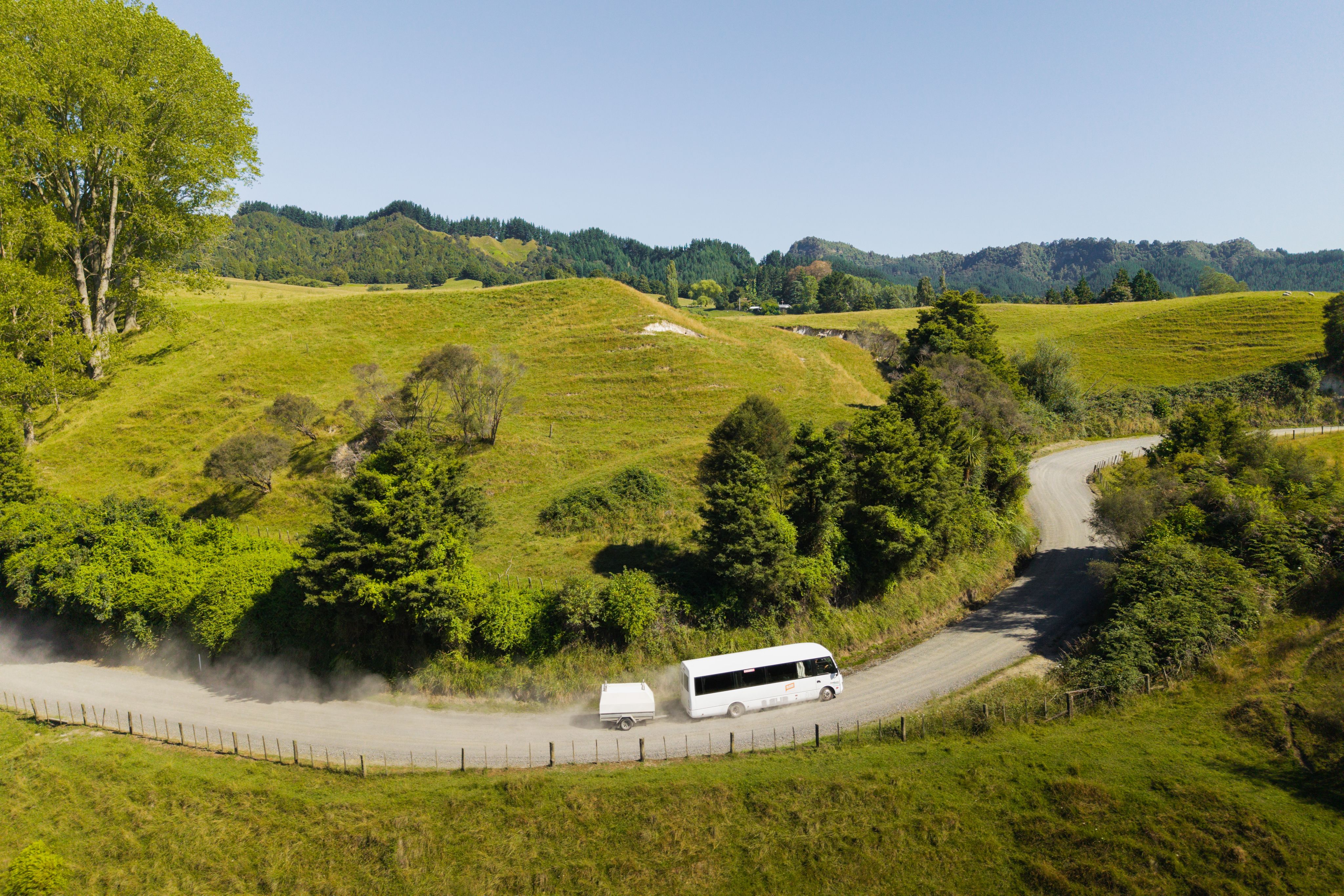
Yes, you are allowed to bring one main bag or suitcase with a maximum weight of 23kg (50lbs), plus one small daypack per person. This limit ensures we have enough space in our secure coach and coach-trailer storage for all travelers.
To ensure your journey is smooth, our local guides recommend keeping these storage tips in mind:
- Stick to the limits: Because our tours involve active moving days and local transport (like scenic ferry crossings and boats), keeping your main bag within the 23kg limit is essential.
- The Daypack is your best friend: Carry your valuables, passport, daily medication, camera, water bottle, and a warm layer in your daypack, which you will keep with you inside the bus cabin.
- Storage during hikes: If you are embarking on an overnight wilderness hike or excursion (such as Blue Duck Station or Abel Tasman), you will only take your small daypack. Your main luggage will remain securely locked on the Stray bus or stored at our host accommodation.
- No Liability for Loss: Please note that Stray accepts no responsibility for the loss of or damage to personal property, so keep your valuables on you at all times.