- HOME
- TOURS
- DESTINATIONS
Aotearoa - untamed
Vibrant + electric
- TRAVEL GUIDES
Budget, packing and more
Everything you need to know
- ABOUT US
- CONTACT
Waitomo & the King Country: The Complete Guide

01 September | 5 min read
Contents
- Waitomo Caves at a glance
- Underground adventures in Waitomo
- Blue Duck Station: Stray's number one stop
- Getting there with Stray
Some of the best things in the King Country happen where you can't see them from the road. Beneath the green farmland of Waitomo lies a largely uncharted network of limestone caves lit by millions of glowworms. And at the end of an unsealed road deep in the hills, a 7,200-acre high country farm called Blue Duck Station has quietly become the stop Stray travellers rate above everywhere else in New Zealand.
Here's the complete guide to going underground at Waitomo and off-grid at Blue Duck Station.
Waitomo Caves at a glance
Waitomo means 'water hole' in te reo Māori, and the name explains the place: over millions of years, water running through soft limestone carved out the cave network beneath the village, decorating it with stalactites and stalagmites along the way. Fewer than 50 people live above ground; below ground live millions of glowworms, which is why thousands of travellers stop here every year.
Most visitors spend around four hours in Waitomo, which is enough for one big underground adventure. All cave exploration is by guided trip, and they range from serene boat drifts to full Indiana Jones expeditions. Pick your comfort level below.
Underground adventures in Waitomo
Black Water Rafting:
Okuhua Cave (The Waitomo Experience) This is the legendary kiwi caving experience: floating through an ancient underground cave system lit by millions of glowworms. You'll don a thick wetsuit, grab a rubber inner tube, and leap off underground waterfalls before wading, swimming, and drifting beneath a spectacular subterranean galaxy of glowworms in Okuhua Cave. It is fast, wet, incredibly fun, and the absolute highlight of any trip to Waitomo.
- Duration: Around 3 hours.
- Notes: All equipment is provided (wetsuit, helmet, headlamp, booties). Maximum weight limit is 130kg.
- How to book: Check live availability and secure your spot on request via the Seymour app.
Haggas Honking Holes
Waitomo Adventures' most concentrated action adventure: a rapid-fire series of abseils, rock climbs, crawls and squeezes past waterfalls, glowworms and cave formations. In Stray's words, you'll feel like Indiana Jones in a washing machine while you discover unique cave formations, glowworms and your inner explorer.
- Duration: around 4 hours
- Where: 654 Waitomo Caves Road
- Good to know: book in your Seymour app for a special discount
The Lost World
Waitomo's most jaw-dropping entrance: a 100-metre abseil, the highest of any Waitomo cave experience, descending slowly for about 20 to 30 minutes through misty, filtered light into the Lost World, Waitomo's largest cave. Strange plant life and rock formations drift past as you spin gently on the rope, and the journey back to the surface winds through a spectacular cavern. Unlike the tubing trips, this one is completely dry.
- Duration: 4 hours
- Where: 654 Waitomo Caves Road
- Good to know: book in your Seymour app for a special discount
Spellbound Glowworm Tour
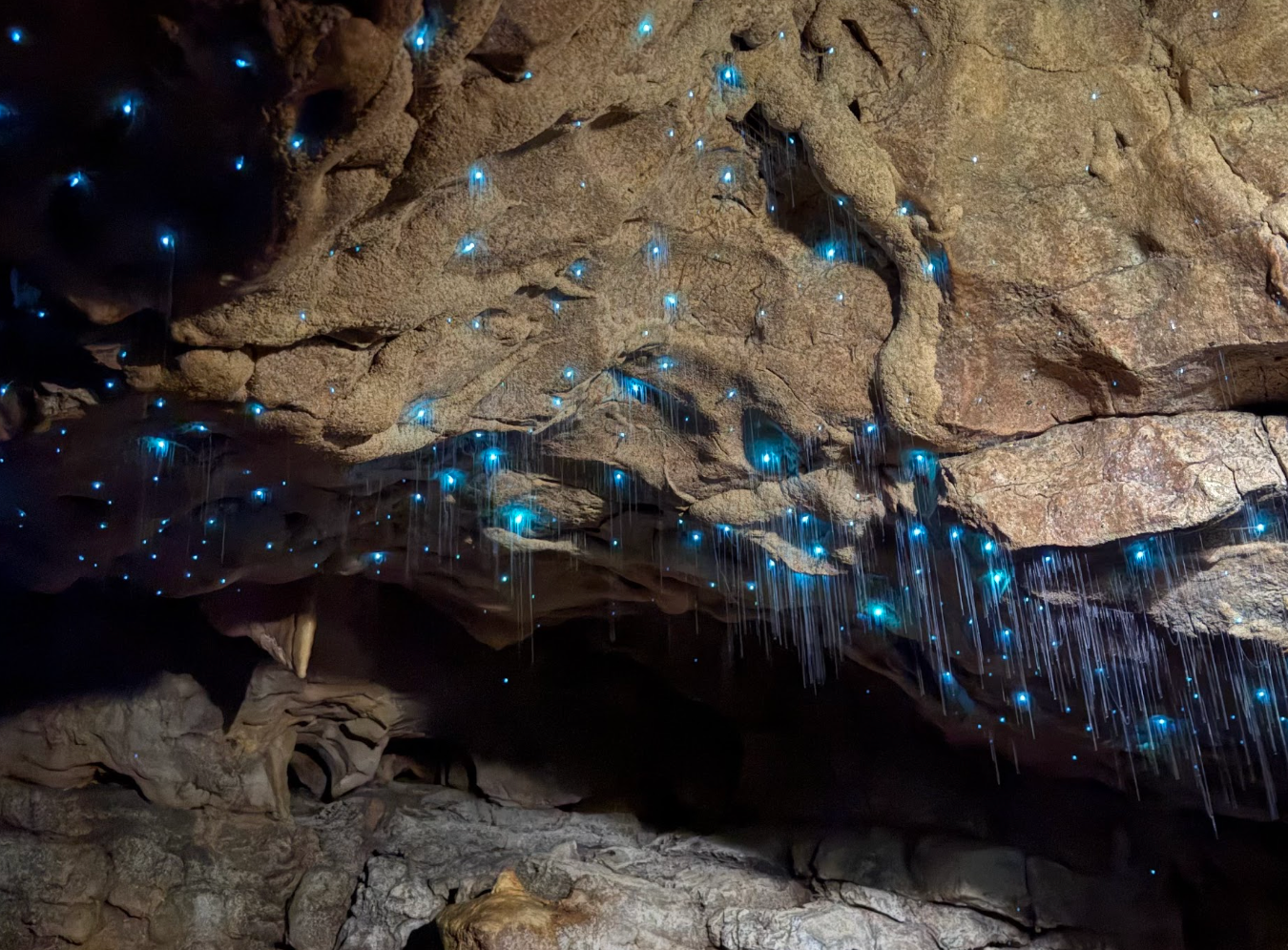
The gentle option, and the biggest, brightest glowworm show in Waitomo: two caves and around 30,000 glowworms. Drift silently by boat beneath a galaxy of blue-green lights in the first cave, then explore the second on foot. No wetsuits, no abseiling, no rapids, and you stay completely dry, ideal if you want the magic without the adrenaline.
- Where: 15 Waitomo Village Road
- Good to know: book in your Seymour app for a special discount
Ruakuri Walk
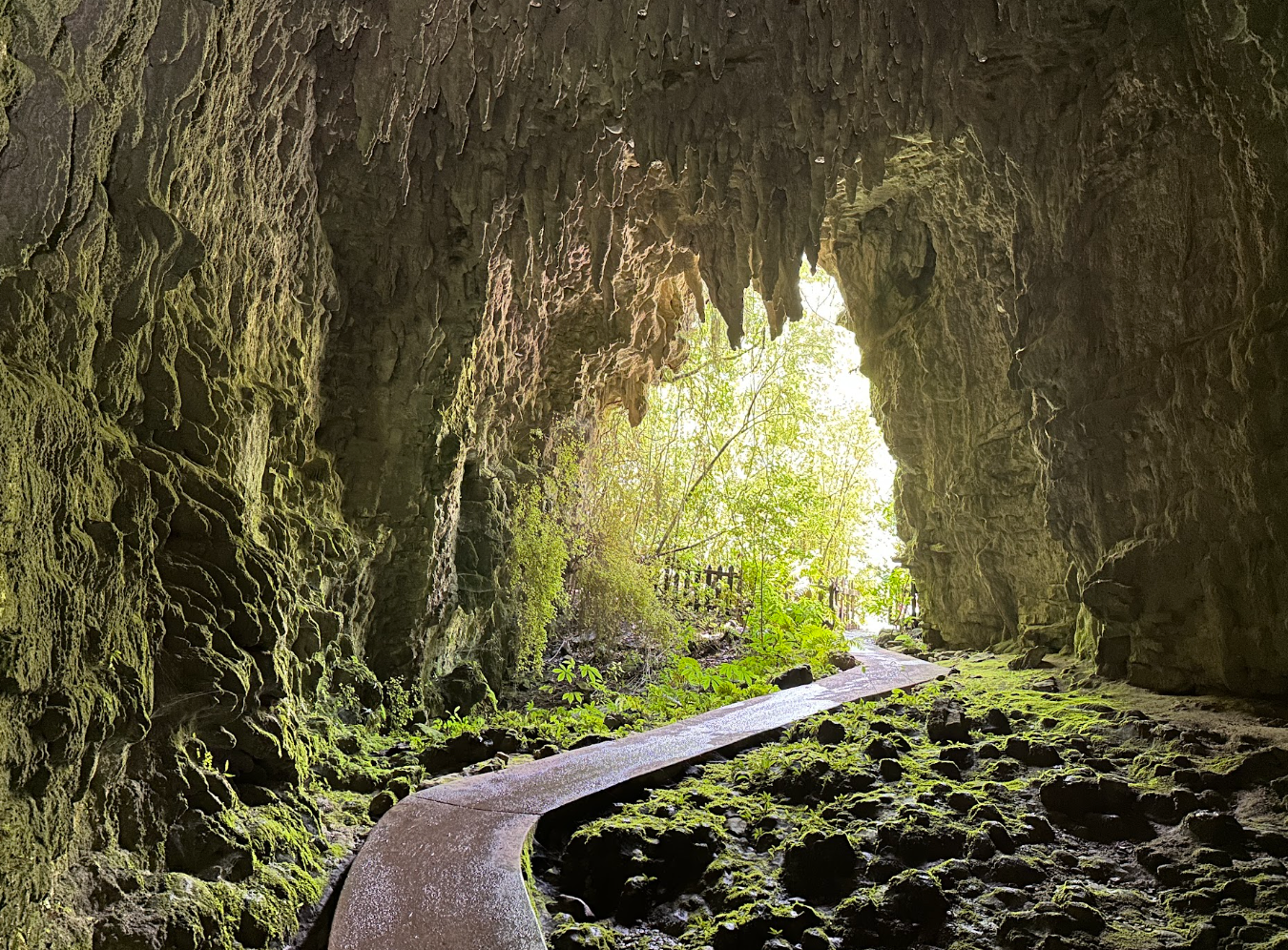
A free walk through a landscape of classic limestone outcrops, native bush and the Waitomo Stream, in a reserve of strong spiritual and cultural significance to Māori. The highlight is the Ruakuri Natural Tunnel, a high-ceilinged cave the stream flows straight into, complete with stalactites and stalagmites. Come back after dark and the track banks light up with glowworms.
- Where: 585 Waitomo Caves Road
- Cost: free
Blue Duck Station: Stray's number one stop
At the end of an unsealed road in Whakahoro, where the Retaruke River meets the Whanganui and the land tips into Whanganui National Park, sits Blue Duck Station: a 7,200-acre working sheep and beef farm that doubles as one of New Zealand's most important private conservation projects. It's consistently ranked as Stray's number one destination, and you can only really understand why by standing on it.
The station is named for the bird it protects. The whio (blue duck) is endangered, rarer than some kiwi species, and Blue Duck Station holds one of the highest concentrations of whio and kiwi in New Zealand, along with wētā, native bats and fish. The team surveys and protects these populations, restores native bush and river health, and preserves the area's historic buildings, work that has earned three Ballance Farm Environment Awards and a Department of Conservation Services to Conservation Award.
There's no phone signal worth speaking of, dinner might be cooked over an open fire, and the stargazing is ridiculous. This is the New Zealand most tourists never reach.
Staying at Blue Duck Lodge
The lodge sits in a clearing above the Retaruke River with views straight out over native bush. Accommodation runs from private cabins to dorms ($45), all self-catering and gloriously off-grid, with the Blue Duck Cafe serving home-cooked meals and speciality dinners cooked over an open fire using organic local produce. Evenings end around the bonfire.
- Where: 4265 Oio Road, Whakahoro
Horse trekking
Become a cowboy for the day on a half-day guided trek ($145) across the station's backcountry: native bush canopy, pine forest, ridge-top tracks and mountain views. With over 7,200 acres to ride, there's at least a week's horse riding here without covering the same track twice.
Kayaking the Whanganui River
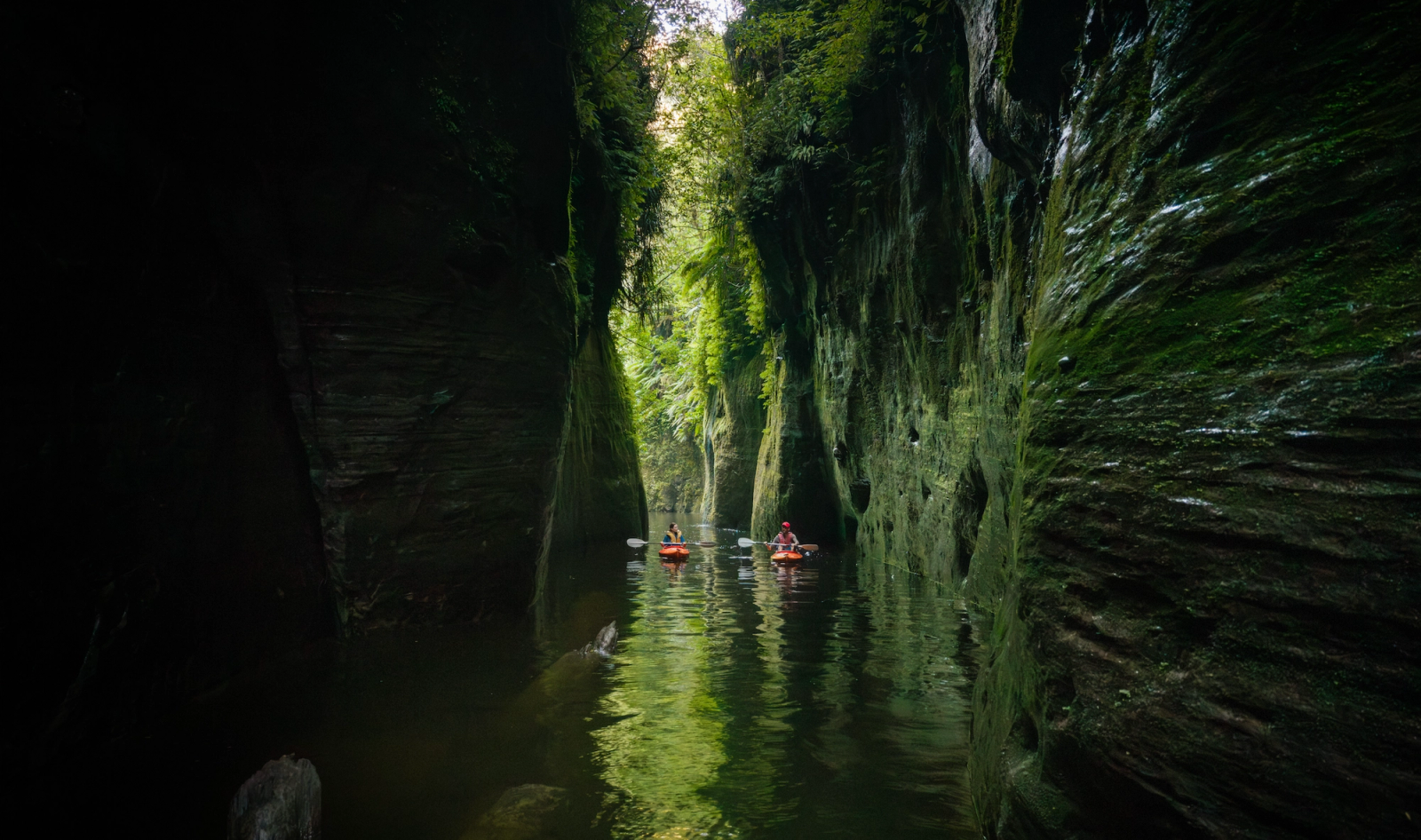
Paddle from Whakahoro to Ohauora down the Whanganui ($129), drifting with the current past caves, crevices and hidden tributaries. Keep your eyes out for whio on the water and goats grazing the banks. A jet boat picks you up at Ohauora and brings you back to the station.
Jet boating to the Bridge to Nowhere
Take the jet boat from Whakahoro about an hour and 15 minutes downriver to Mangapurua Landing, then walk 40 minutes through the bush to the Bridge to Nowhere, the concrete bridge in the middle of the wilderness left behind when the surrounding settlement was abandoned. Guides fill in the remarkable history on the way.
4WD Eco Safari
The best introduction to the station ($100): an off-road tour through the farm's hills taking in local history, the conservation programme and the day-to-day workings of a sheep and beef station. In summer the tour adds a short kayak through the gorge near the Kaiwhakauka falls, with a good chance of spotting whio.
Clay bird shooting
Test your aim with a qualified instructor and 10 clay targets ($40). Can you hit all ten?
Guided goat hunt
Goats are a serious pest on the station: with no natural predators, they multiply fast and strip native habitat. This guided hunt ($150) is conservation in action, and dinner's on you: your guide helps prepare the meat and shares cooking advice back at the lodge's self-catering kitchen.
Kaiwhakauka waterfall walk
A free three-hour return hike through native bush to the Kaiwhakauka waterfall. Quiet, beautiful, and another good chance to spot a whio in the wild.
Getting there with Stray
Waitomo and Blue Duck Station both feature on Stray's North Island routes, and Whakahoro is exactly the kind of place Stray exists for: you won't get there by public transport, and you'd think twice about taking a rental down the road. Your driver handles the logistics and can book the caves and station activities along the way, with Seymour app discounts on most of the experiences above.
FAQs
What are the Waitomo Caves famous for?
Millions of glowworms living in a vast limestone cave network. Experiences range from gentle glowworm boat tours to black water tubing and a 100-metre abseil into the Lost World, Waitomo's largest cave.
Do you need a guide for the Waitomo Caves?
Yes, all cave exploration at Waitomo is by guided trip. The free Ruakuri Walk above ground can be done independently, including at night when the glowworms come out along the track.
Can you see glowworms without getting wet at Waitomo?
Yes. The Spellbound tour visits two caves with around 30,000 glowworms by boat and on foot, with no wetsuits, abseiling or rapids. The free Ruakuri Walk also shows glowworms after dark.
What is Blue Duck Station?
A 7,200-acre working sheep and beef farm and conservation project at Whakahoro, on the edge of Whanganui National Park. It protects one of New Zealand's highest concentrations of endangered whio (blue duck) and kiwi, and offers accommodation, horse trekking, kayaking, jet boating and farm experiences.
How do you get to Blue Duck Station?
Via an unsealed road into Whakahoro in the Ruapehu District. There's no public transport; Stray's North Island trips stop at the station, with activities bookable on board.
What is the Bridge to Nowhere?
A concrete road bridge deep in the Whanganui wilderness, built for a settlement that was later abandoned. From Blue Duck Station it's reached by jet boat to Mangapurua Landing and a 40-minute bush walk.