- HOME
- TOURS
- DESTINATIONS
Aotearoa - untamed
Vibrant + electric
- TRAVEL GUIDES
Budget, packing and more
Everything you need to know
- ABOUT US
- CONTACT
Laos Travel Guide

31 August | 8 min read
Contents
- Laos Travel Guide: Vientiane, Kong Lor, Vang Vieng and Luang Prabang
- Laos essentials
- Vientiane: the laid-back capital
- Kong Lor: the natural wonder most travellers miss
- Vang Vieng: adventure playground
- Luang Prabang: the jewel of Laos
- Getting there with Stray
- FAQs
Laos Travel Guide: Vientiane, Kong Lor, Vang Vieng and Luang Prabang
Nestled in the heart of Southeast Asia between Thailand, Cambodia, Vietnam, Myanmar and China, landlocked Laos is often overlooked in favour of its more popular neighbours. Their loss. With its stunning and diverse landscape, friendly and relaxed people and responsible tourism practices, Laos is one of the most enchanting countries in the region.
The country's full name is the Lao People's Democratic Republic, shortened to Laos PDR, but locals will tell you the acronym really stands for 'Please Don't Rush'. Take their advice: relax in a hammock by the Mekong, gaze at the stars, and sip a coffee in a French-style cafe in Luang Prabang. This guide covers the essentials plus the four unmissable stops, working south to north the way Stray's Laos route does: Vientiane, Kong Lor, Vang Vieng and Luang Prabang.
Laos essentials
Time zone
Laos is seven hours ahead of Greenwich Mean Time (GMT+7), the same time zone as Thailand, Vietnam and Cambodia, with no daylight saving changes.
Climate and when to go
Laos has a hot, humid tropical climate with two seasons: dry from roughly October through March and wet from May through September. The south gets the hottest temperatures, up to 38 degrees Celsius, while the northern regions can drop to 10 degrees in winter.
Currency
The currency is the Kip (LAK), pronounced 'Kiip', in notes from 500 up to 50,000. Most ATMs dispense up to 700,000 Kip, with some machines in larger towns going to 2 million. Thai Baht and US Dollars are accepted in larger towns, but it's more culturally appropriate to pay in Kip. One catch: you can only exchange money into Kip inside Laos, and you can't change it back once you've left, so spend it before you go (on Stray trips there's a donations box for leftover notes).
Shopping
Lao days start early. Shops open between 6 and 7am, often close for a couple of hours around 11am, then shut for the day between 4 and 5pm. Don't expect supermarkets outside the large cities. Haggling is common but far gentler than in Thailand, and the displayed price is often already fair, though there are bargains to be had.
Health and insurance
Visit a travel doctor before you go. Mosquito-borne diseases including dengue fever and, in remote countryside, malaria are present, so carry strong insect repellent (30 per cent DEET or higher). Valid, current travel insurance is essential and is required to travel with Stray.
Getting to Laos
Laos borders five countries and is easy to reach overland from Thailand, Cambodia, Vietnam and China, or by air into Vientiane, Luang Prabang and Pakse. For every border crossing, flight route and the famous two-day Mekong slow boat with Stray's exclusive village homestay, see our full guide to getting to Laos and the Mekong River Homestay.
Vientiane: the laid-back capital
Often overlooked in favour of Luang Prabang, Vientiane deserves more credit. The capital and largest city of Laos (population around 197,000) sits along the Mekong, its easily navigable streets lined with French colonial villas, blooming bougainvillea and centuries-old temples. It's compact enough to explore on foot or by bicycle in a few days, with the heart of the action in the grid-like downtown around Rue Samsenthai and the river.
Things to see and do in Vientiane
- Pha That Luang: start early with a ride out to this 16th-century stupa covered in gold leaf, the most revered religious site in Laos, and beat the crowds.
- The downtown circuit: Wat Si Saket (the oldest surviving temple in Vientiane), the Lao National Museum and the iconic French-style Victory Gate, Patuxai, are all within walking distance of each other downtown.
- The COPE Visitor Centre: the Cooperative Orthotic and Prosthetic Enterprise is a heartbreaking and inspiring centre covering the unexploded ordnance that remains in Laos from the Vietnam War era, and the prosthetic and rehabilitation services provided to those affected. Watch a documentary, talk to a volunteer, and grab an ice cream at the cafe, where proceeds support COPE's programmes.
- Evenings on the Mekong: as the sun sets, join the open-air aerobics classes on the banks of the Mekong, browse the night market (far less touristy than Luang Prabang's), and settle in at the bars and restaurants between Quai Fa Ngum and Rue Setthathilath. Makphet near Wat Ong Teu serves delicious Lao dishes while providing hospitality training for disadvantaged youth, and Beerlao flows at every sidewalk cafe.
Kong Lor: the natural wonder most travellers miss
Kong Lor would be just another tiny Lao village tucked amid stunning scenery, except that it sits less than a kilometre from a spectacular geological phenomenon: a 7.5 kilometre cave running right through the mountains.
Many travellers never make it here, put off by the multiple public bus connections required. That's exactly why Stray built Kong Lor into its Laos route: the Tham Kong Lor Cave is truly one of the natural wonders of Laos. The Nam Hin Bun river disappears into the mountain and winds through a black cave up to 100 metres wide and high in places, filled with huge chambers, otherworldly stalactites and limestone formations. You enter on foot, then board a wooden boat for the journey through the darkness, with gothic karst mountains and cliff-clinging trees waiting at the far end.
- Top tip: wear shoes that stay on your feet and can get wet, bring a torch if you have one, and wear your swimwear underneath so you can cool off in the river afterwards.
Vang Vieng: adventure playground
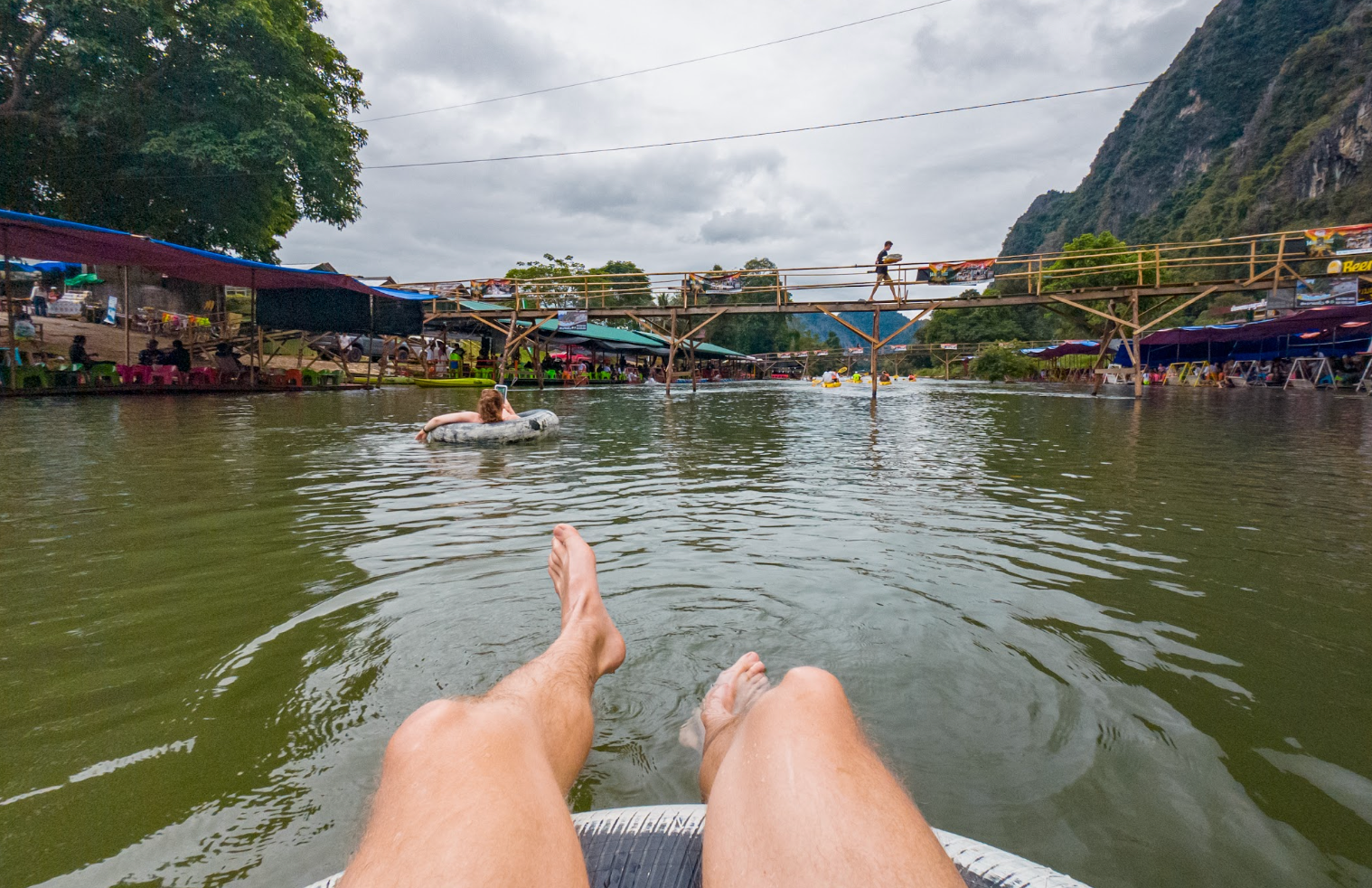
Vang Vieng has something for everyone. Party-minded travellers love the jungle parties, tubing and nightlife. Adventure seekers scale rocky ledges, kayak rapids and explore by bicycle. And everyone ends up photographing the Blue Lagoon. Surrounded by dramatic karst mountains on the Nam Song River, the vibe here can be whatever you want it to be, so plan a few nights to make the most of it.
A word on the town's reputation: Vang Vieng became famous for combining partying and river tubing, and its past includes serious accidents that led to new safety regulations. Tubing is still on offer and still fun, it's just managed far more sensibly than it once was.
Things to see and do in Vang Vieng
- The Blue Lagoon: one of the best swimming holes in Laos, a few kilometres out of town where the river flows out of lush jungle into breathtaking blue water. Take a tuk-tuk (the roads are rough for cycling), watch the local kids launch themselves from the tree over the deep end, and if you're keen, climb the stairs behind the lagoon to explore Tham Phu Kham cave, home to a bronze reclining Buddha. Bring a torch and good shoes.
- River tubing: rent an inner tube in town (tuk-tuk transfer included) and spend the day floating down the Nam Song surrounded by karst mountains, with a few riverside bars happy to throw you a rope on the way past.
- Cave tubing: a completely different tubing experience at Tham Nam (Water Cave): total darkness, a headlamp, and a rope to guide you through the flooded cave system. About 20 minutes, and your Stray guide can book the local tour.
- Rock climbing: the karst cliffs around town are perfect for climbing, with operators catering to complete beginners through to old pros.
- Hot air ballooning: see the landscape from above with Above Laos, a Lao-owned and operated balloon company, and find out why every Vang Vieng skyline photo seems to feature a balloon.
- Kayaking: explore the Nam Song by kayak, with tour options ranging from rapids runs to a paddle that takes you nearly all the way to Vientiane.
- Volunteer: the SAELAO project is a farm run by a local resident where you can teach English, garden and help with community projects. A genuine feel-good experience.
- The nightlife: the Irish Pub, Sakura Bar and Full Moon Bar are reliable nights out, and on Fridays the Jungle Project's weekly Jungle Party runs from 10pm until the early hours just outside town.
Eating and drinking in Vang Vieng
If you've been living on market food, Vang Vieng is one of the only places in Laos that excels at international cuisine, so get your burger, pizza or roast dinner fix. Gary's Irish Bar in the centre of town has a pool table, well-priced drinks, homestyle pub food, live sport and live music. Luang Prabang Bakery on Kangmuong Street does cookies as big as your face, massive baguette sandwiches and proper espresso. And Green Restaurant pairs beautiful Nam Song views with delicious Lao and Thai food.
Luang Prabang: the jewel of Laos
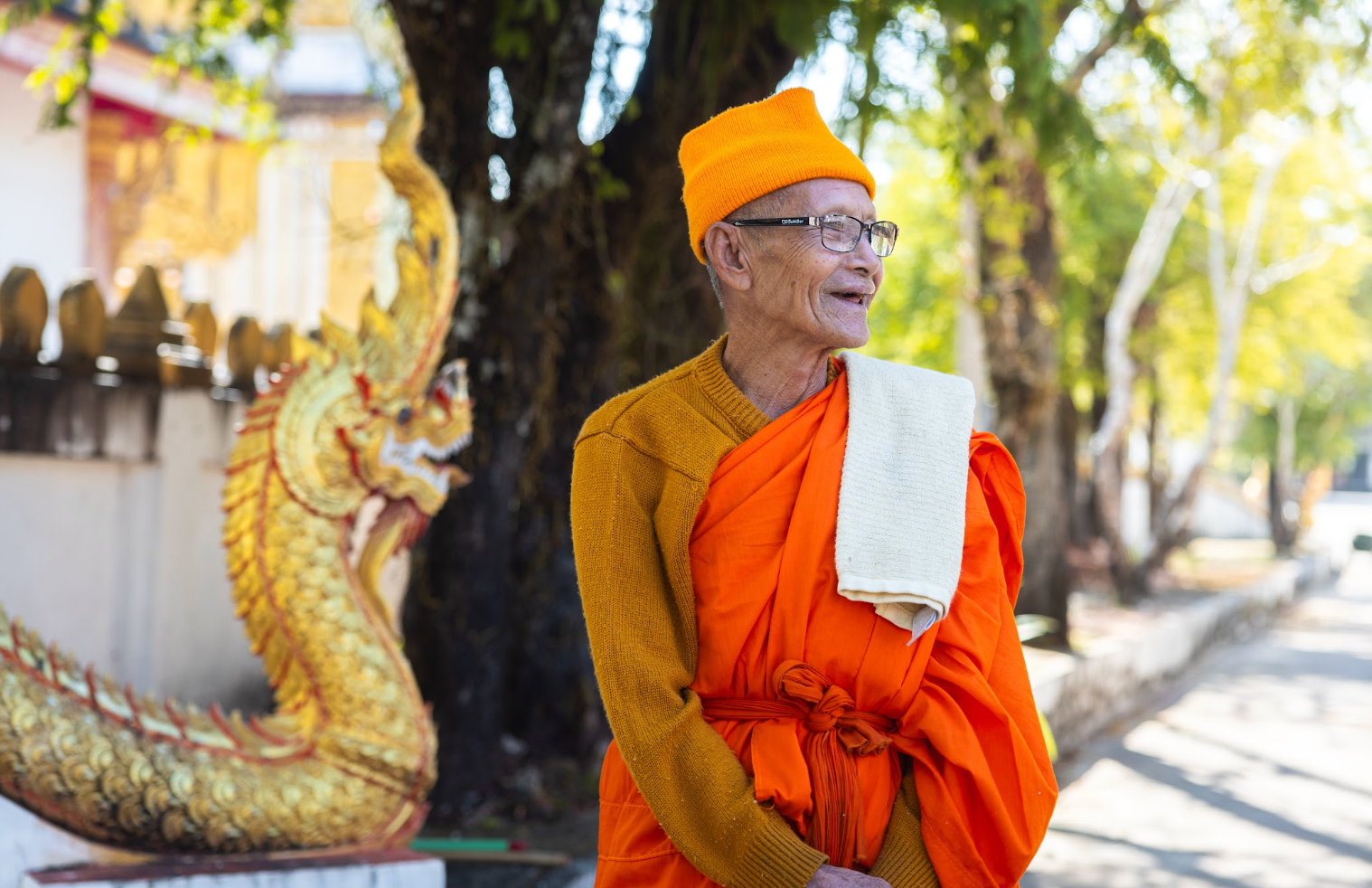
A colourful ancient city in north central Laos, Luang Prabang (meaning 'Royal Buddha Image') is home to more than 30 Buddhist temples and sits at the meeting of the Mekong and Nam Khan rivers. A UNESCO World Heritage city and the spiritual capital of Laos, it's a place of golden temples, fruiting mango trees, monks in saffron robes and artfully preserved French colonial architecture, widely considered one of the most beautiful cities in Southeast Asia.
The vibe is a whole new level of chill. Explore on foot or by bike, then spend long hours in riverside cafes watching colourful boats drift past as the sun sets. It's the final stop on Stray's Laos route, and well worth a couple of days.
Things to see and do in Luang Prabang
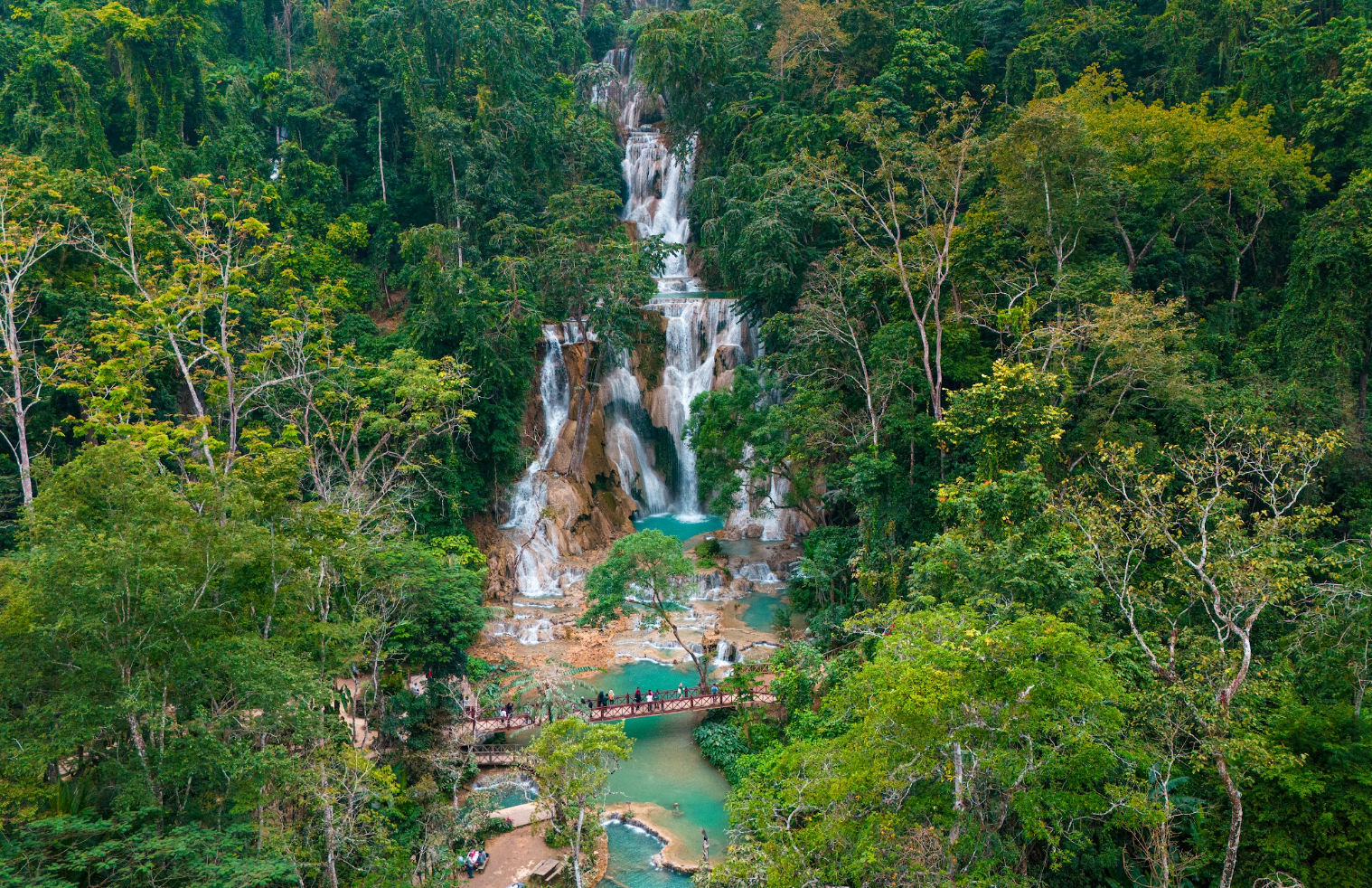
- Kuang Si Waterfalls: a three-tiered waterfall about 30 kilometres from town, surrounded by lush forest, with turquoise pools perfect for swimming and picnic areas for lazier afternoons. There's a rescue centre for Asiatic moon bears on site, and the hike to the top rewards you with a spectacular view.
- The Living Land Farm: rated Luang Prabang's number one activity on TripAdvisor, this working organic farm run by local farmers teaches you how rice is traditionally grown and harvested. An authentic experience you'll remember forever.
- The alms giving ceremony: each morning at dawn, long lines of monks stream through town collecting food donations in the Tak Bat ceremony. It's a beautiful sight, but one too often disrespected by visitors chasing photos. If you go, dress respectfully and photograph only from a discreet distance.
- The Traditional Arts and Ethnology Centre (TAEC): a fantastic centre preserving the culture of Laos's tribal groups through craft workshops, events and exhibitions.
- Phousi Mountain: 300 stairs to the best sunset in Laos, looking out over the Mekong from the hill in the middle of town. The view is worth every step.
- Tad Sae Waterfalls: in the wet season, combine ziplining with your waterfall swim, with biking, rafting and trekking tours in the surrounding area too.
- Cooking and craft classes: learn to cook Lao cuisine at a picturesque lakeside cooking school, or take a silk dyeing and weaving class and make your own souvenir to rival the night market's finest.
- The Royal Palace Museum: see how Lao royalty lived, and don't miss the vibrantly mosaiced temple on the grounds.
- The Pak Ou Caves: an important pilgrimage site holding thousands of Buddhist images placed in the limestone caves over hundreds of years. Stray travellers arrive by private boat en route from the Mekong homestay; independent travellers can take a short boat trip from town.
Eating and drinking in Luang Prabang
Walk the vibrant night market and grab a cheap feed at the vegetarian buffets (around 15,000 Kip, roughly 2 USD) or the BBQ stands serving skewers and sausages, then squeeze onto a bench alongside backpackers and locals. Afterwards, head to the bars on the Nam Khan side of town: Icon Klub for art nouveau style and impromptu slam poetry, Utopia and Hive Bar for the backpacker scene. Bars close at midnight, but the nightclubs Dao Fa and Muang Sua keep the Lao party going, and there's always a tuk-tuk waiting to run you to the famous Bowling Alley, open until 3am. Just see if you can still make the 5am alms ceremony.
Getting there with Stray
Stray's Laos route links everything in this guide: starting in Vientiane, reaching Kong Lor on day two, on to Vang Vieng, and finishing in Luang Prabang via the two-day Mekong slow boat and exclusive village homestay. Transport, accommodation, a knowledgeable local guide and the hard-to-reach stops are all taken care of, so all you have to do is enjoy the ride. Please don't rush, remember.
FAQs
When is the best time to visit Laos?
The dry season, roughly October through March. The south can reach 38 degrees Celsius, while northern regions can drop to 10 degrees in winter, so pack layers if you're heading north in the cooler months.
What currency is used in Laos?
The Lao Kip (LAK). Thai Baht and US Dollars are accepted in larger towns, but paying in Kip is more culturally appropriate. Note that Kip can only be exchanged inside Laos, and you can't change it back after leaving, so spend what you withdraw.
What is the Kong Lor Cave?
A 7.5 kilometre river cave running through the mountains of Phu Hin Bun National Park in southern Laos, up to 100 metres wide and high in places. You travel through it by wooden boat, and it's considered one of the natural wonders of Laos.
Is tubing in Vang Vieng safe?
Vang Vieng's tubing scene had a troubled past, and after a number of serious accidents new safety regulations were introduced. Tubing today is far more sensibly managed and remains a fun highlight, just treat the river with respect and drink sensibly.
What is Luang Prabang known for?
Being one of the most beautiful cities in Southeast Asia. It's a UNESCO World Heritage city and the spiritual capital of Laos, known for its 30-plus Buddhist temples, French colonial architecture, the morning alms giving ceremony and the nearby Kuang Si Waterfalls.
How do I get to Laos?
Overland from Thailand, Cambodia, Vietnam or China, or by air into Vientiane, Luang Prabang or Pakse. See our full guide to getting to Laos for every border crossing, flight route and the two-day Mekong slow boat option.